Community Health Nursing
Nutrition and Community Health
Balanced diet, nutritional requirements, nutritional assessment, malnutrition, protein-energy malnutrition, micronutrient deficiencies, nutritional surveillance and national nutrition programmes.
Open quizzes and study tools Download PDF
CHAPTER 11 / COMMUNITY HEALTH NURSING 11. Nutrition and Community Health
1. Introduction and balanced diet
Community nutrition promotes adequate, safe and culturally acceptable food across the life course. A balanced diet provides energy, protein, fats, vitamins, minerals, fibre and water according to age, activity, physiological stage and health conditions. Food insecurity and infection can interact to worsen nutritional status.
2. Nutrients and sources
| Nutrient | Major sources and role |
|---|---|
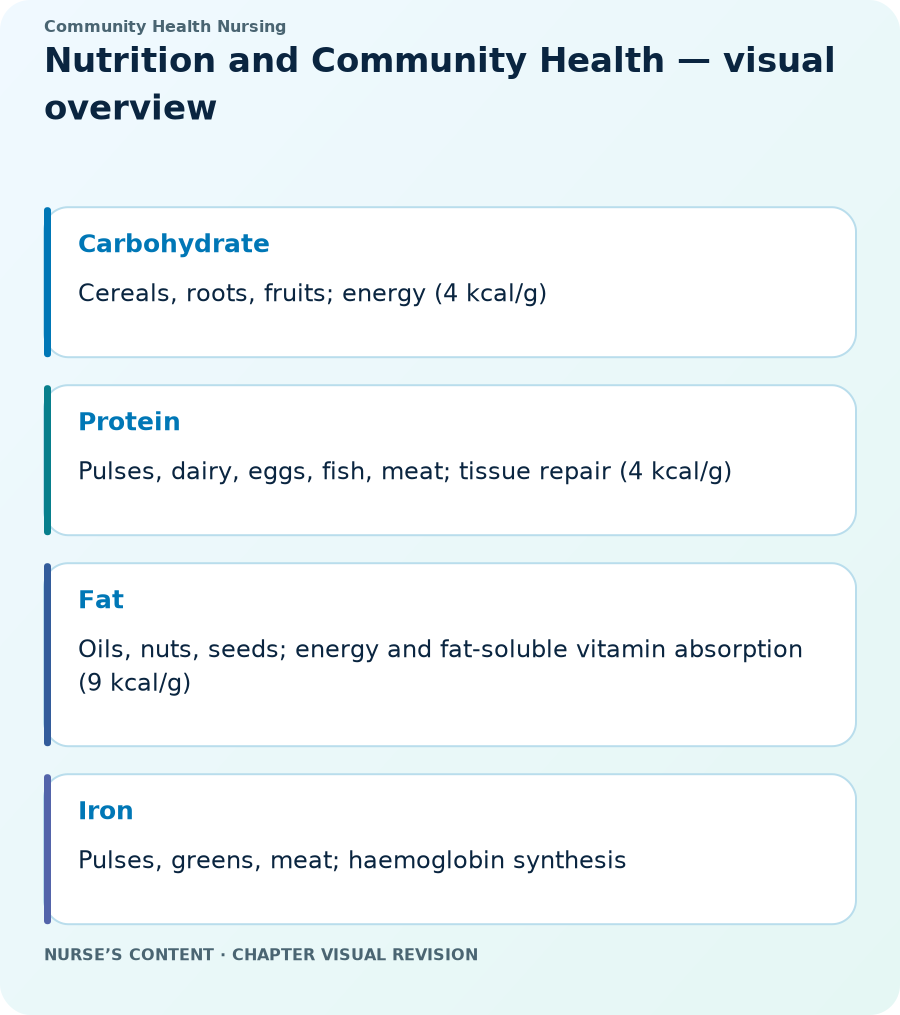
| Carbohydrate | Cereals, roots, fruits; energy (4 kcal/g) |
| Protein | Pulses, dairy, eggs, fish, meat; tissue repair (4 kcal/g) |
| Fat | Oils, nuts, seeds; energy and fat-soluble vitamin absorption (9 kcal/g) |
| Iron | Pulses, greens, meat; haemoglobin synthesis |
| Calcium | Dairy, fortified foods, selected greens; bone health |
| Iodine | Iodised salt; thyroid hormone synthesis |
| Vitamin A | Orange/green vegetables, animal sources; vision/immunity |
| Vitamin C | Fruit and vegetables; collagen and iron absorption |
Requirements depend on age, pregnancy, lactation, illness and activity; refer to ICMR-NIN recommendations for specific RDA values.
3. Nutritional assessment: ABCD
Anthropometric: weight, length/height, BMI, MUAC and growth trends. Biochemical: Hb and selected tests based on indications. Clinical: oedema, pallor, oral/skin findings and functional status. Dietary: 24-hour recall, food frequency and household food access. No single test measures all aspects of nutrition.
4. Malnutrition and protein-energy malnutrition
Malnutrition includes undernutrition, micronutrient deficiency, overweight and obesity. Wasting is low weight-for-height, stunting low height-for-age and underweight low weight-for-age. In children 6–59 months, severe acute malnutrition can be identified by MUAC below 115 mm, weight-for-height below −3 Z scores or bilateral pitting nutritional oedema. Moderate wasting by MUAC is 115 to below 125 mm; interpret with approved protocols. [15]
| Feature | Marasmus | Kwashiorkor |
|---|---|---|
| Main finding | Severe wasting | Bilateral nutritional oedema |
| Appearance | Loss of fat/muscle | Oedema may mask weight loss |
| Skin/hair | May be thin/dry | Changes may occur |
Both require appropriate clinical assessment. Severe wasting with complications needs urgent facility evaluation; feeding plans must follow malnutrition protocols.
5. Micronutrient deficiencies
| Deficiency | Key manifestations | Prevention |
|---|---|---|
| Iron | Anaemia, fatigue | Iron-rich diet, prescribed IFA, treat causes |
| Vitamin A | Night blindness, xerophthalmia | Diet and programme supplementation |
| Iodine | Goitre and developmental harm | Adequately iodised salt |
| Vitamin D | Rickets/osteomalacia | Diet, safe sunlight, prescribed supplementation |
| Folate/B12 | Megaloblastic anaemia | Adequate diet and appropriate replacement |
Clinical signs are not specific; refer for assessment where needed.
6. Infant and young child feeding
Early initiation when stable; exclusive breastfeeding until six months; complementary feeding from six months with suitable texture, frequency and nutrient density; continue breastfeeding up to two years or beyond. Encourage responsive feeding and food hygiene. Monitor growth, development and caregiver needs.
7. Nutrition programmes and surveillance
Saksham Anganwadi and POSHAN 2.0 support supplementary nutrition and growth-related services; PM POSHAN supports school meals; Anaemia Mukt Bharat addresses anaemia through life-stage interventions; vitamin A and IFA are provided according to programme guidance. Nutritional surveillance tracks growth, wasting, anaemia and service coverage over time. Compare age-appropriate indicators and refer children with danger signs.
8. Nursing importance
Assess diet and growth, counsel using locally available food, identify severe malnutrition, support breastfeeding, coordinate Anganwadi and referral services, maintain records and evaluate outcomes.
9. Nutrition assessment and interpretation
Anthropometry
Weight, length or height, age, sex and MUAC are important in child nutrition assessment. Verify age and measurement technique before plotting growth charts. Weight-for-height identifies wasting; height-for-age identifies stunting; weight-for-age identifies underweight but does not alone distinguish acute and chronic undernutrition.
| Indicator | Meaning |
|---|---|
| Wasting | Low weight-for-length or weight-for-height, suggesting acute undernutrition. |
| Stunting | Low length/height-for-age, reflecting chronic or recurrent growth restriction. |
| Underweight | Low weight-for-age. |
| Bilateral pitting oedema | Possible severe acute malnutrition; requires appropriate clinical assessment. |
10. Community nutrition care example
A two-year-old has declining weight on repeated growth measurements. Recheck measurements, assess feeding frequency and diversity, illness, appetite, food security and caregiver concerns. Check for wasting and oedema, and arrange appropriate nutritional and medical assessment. Do not wait for the next routine growth monitoring visit if severe acute malnutrition or acute danger signs are suspected.
Nutritional education
Use affordable local foods, demonstrate portion sizes and discuss age-appropriate texture. Emphasize dietary variety, adequate energy and protein, safe water and food hygiene, breastfeeding support and prescribed micronutrient interventions. Coordinate Anganwadi and health services; education alone cannot resolve food insecurity.
11. Important Examination Questions
Long Answer Questions
- 1. Explain nutritional assessment and management of community malnutrition.
- 2. Describe national nutrition programmes.
- 3. Explain anthropometric indicators and the community management of a child with growth faltering.
- 4. Discuss the role of food security and micronutrient prevention in community health.
Short Answer Questions
- 1. ABCD
- 2. marasmus vs kwashiorkor
- 3. growth chart
- 4. micronutrient deficiencies
- 5. Stunting versus wasting.
- 6. Bilateral pitting oedema.
- 7. Nutrition counselling and growth chart.
Very Short Answer Questions (with answers)
- 1. BMI formula? kg/m².
- 2. MUAC severe wasting threshold (6–59 months)? <115 mm.
- 3. Complementary feeding? Six months.
- 4. Which measure relates weight to height? — Weight-for-height.
- 5. What is MUAC? — Mid-upper arm circumference.
12. Quick Revision
- • Growth trends are more useful than isolated weight measurements.
- • Wasting and stunting describe different nutritional indicators.
- • Severe wasting or nutritional oedema requires prompt assessment.
- • Nutrition services must address household food access.
Conclusion
Community nutrition requires both individual counselling and action on food security, infection and service access.
Chapter reference images