Community Health Nursing
Non-Communicable Diseases
Epidemiology, risk factors, prevention, screening and control of hypertension, diabetes mellitus, cardiovascular diseases, cancer, chronic respiratory diseases and other major non-communicable diseases.
Open quizzes and study tools Download PDF
CHAPTER 13 / COMMUNITY HEALTH NURSING 13. Non-Communicable Diseases
1. Definition and epidemiology
Non-communicable diseases (NCDs) are diseases not transmitted from person to person as ordinary infections; many are chronic and multifactorial. Major groups include cardiovascular disease, cancers, diabetes and chronic respiratory disease. Their burden includes death, disability, lost income and lifelong care. Some infectious agents contribute to NCDs, such as HPV and cervical cancer.
2. Risk factors
| Modifiable | Non-modifiable or contextual |
|---|---|
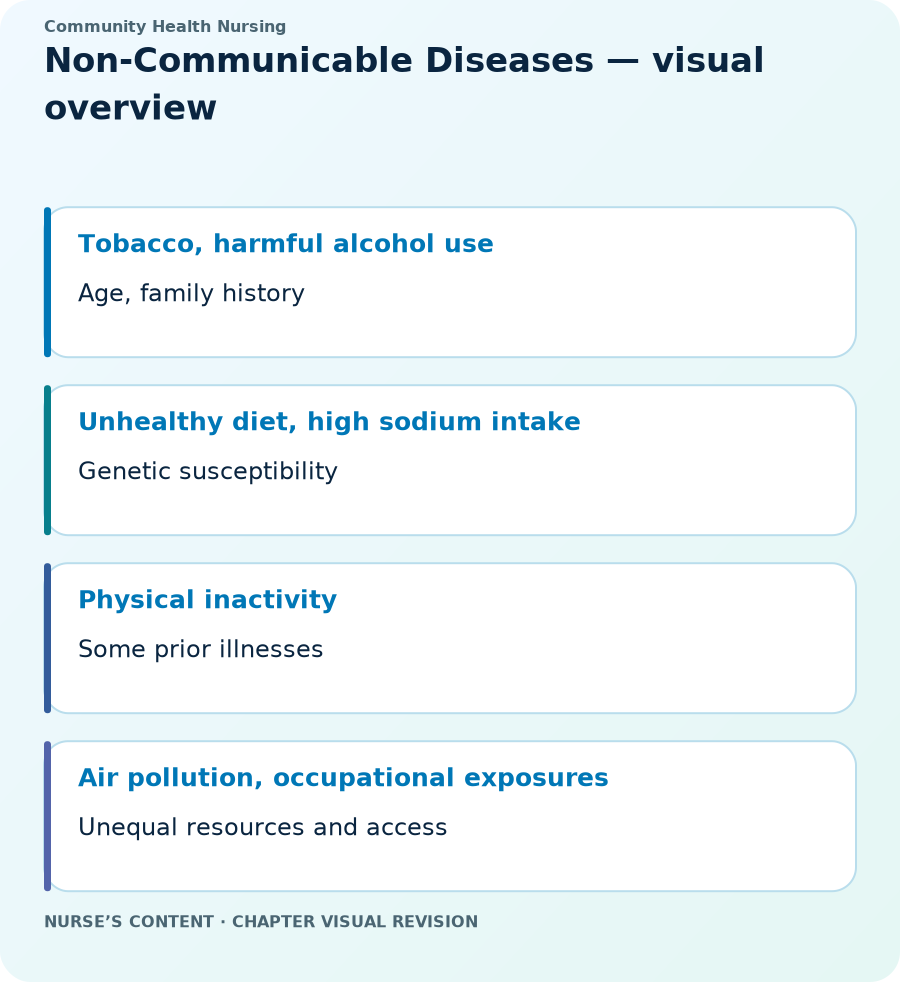
| Tobacco, harmful alcohol use | Age, family history |
| Unhealthy diet, high sodium intake | Genetic susceptibility |
| Physical inactivity | Some prior illnesses |
| Air pollution, occupational exposures | Unequal resources and access |
Intermediate risks include hypertension, high blood glucose, abnormal lipids and excess adiposity. Prevention requires both personal support and healthy public policies.
3. Major NCDs and screening
| Condition | Common risk/findings | Prevention and care |
|---|---|---|
| Hypertension | Often asymptomatic; elevated BP | Accurate repeat measurement, lifestyle support, prescribed treatment |
| Type 2 diabetes | Family history, excess adiposity; may be asymptomatic | Glucose testing, nutrition, activity, complication screening |
| Cardiovascular disease | Tobacco, high BP, diabetes, dyslipidaemia | Risk assessment, prescribed prevention and treatment |
| Cancer | Variable by site; persistent unexplained symptoms | Tobacco cessation, vaccination, screening and timely diagnosis |
| COPD | Tobacco smoke, biomass smoke and occupational exposure | Exposure reduction, spirometry-based assessment and care |
4. Diagnostic context
Hypertension is often assessed using clinic BP at or above 140/90 mmHg in WHO-based adult pathways, with repeat confirmation unless urgent circumstances apply; targets vary. Diabetes may be diagnosed using fasting plasma glucose ≥126 mg/dL, HbA1c ≥6.5% with standardized testing, 2-hour plasma glucose ≥200 mg/dL after a 75-g oral glucose load, or random plasma glucose ≥200 mg/dL with classic symptoms or hyperglycaemic crisis. Confirm abnormal results without unequivocal hyperglycaemia. Screening glucometer values are not equivalent to a definitive laboratory diagnosis.
5. National programme and prevention
India's NP-NCD (formerly NPCDCS) supports risk assessment, population-based screening from age 30 years, confirmation, treatment and referral. Common screening areas include BP, blood glucose, oral cancer, breast cancer and cervical cancer in eligible populations. [7] Screening frequency and methods vary by programme, risk and sex-related clinical eligibility.
Primary prevention: tobacco cessation, balanced diet, physical activity, reduced salt intake and vaccination where applicable. Secondary: age- or risk-appropriate screening with diagnostic follow-up. Tertiary: prevent complications, rehabilitation, foot care and chronic disease monitoring.
6. Urgent warning signs
Chest pressure with sweating or breathlessness, sudden facial weakness/speech disturbance, severe dyspnoea, altered consciousness or suspected severe hypoglycaemia require immediate clinical assessment. A positive screening test alone does not establish a diagnosis; record and arrange confirmatory evaluation.
7. Nursing responsibilities
Use validated equipment; assess risk factors and readiness to change; explain results; refer abnormal findings; support prescribed medication adherence, follow-up, home monitoring and complication prevention. Coordinate tobacco-cessation support and accessible care. Evaluate confirmed linkage to treatment rather than merely number screened.
8. Risk assessment and screening pathway
Screening seeks to identify people who may have a condition before symptoms or complications develop. A positive screen requires confirmation and a route to treatment. In India, population-based screening under the national NCD programme focuses on eligible adults, including those aged 30 years and above for major screening services. Exact sex, age and risk eligibility for each test follows programme guidance.
| Condition | Community nursing assessment |
|---|---|
| Hypertension | Correct cuff size, rest, repeated BP measurements and authorized confirmation. |
| Diabetes | Risk factors, glucose testing under protocol, symptom and medication review. |
| Oral cancer | Tobacco and alcohol history, persistent ulcers or suspicious lesions; referral. |
| Breast and cervical cancer | Age-appropriate education and screening referral; evaluate warning symptoms without waiting for routine screening. |
| Chronic respiratory disease | Tobacco, biomass smoke and occupational exposure; breathing symptoms and referral. |
9. Long-term care example
A patient with elevated screening BP has no complaints. Explain that hypertension may be asymptomatic, arrange repeat measurement and clinician assessment, and discuss tobacco avoidance, physical activity, diet and medication access as appropriate. Record follow-up completion. Severe symptoms, including chest pain, acute neurological signs or breathlessness, warrant urgent care rather than routine follow-up.
Prevention at population level
Support smoke-free environments, safe walking spaces, affordable nutritious food and access to primary care. Individual counselling is more effective when structural barriers are addressed.
10. Important Examination Questions
Long Answer Questions
- 1. Explain risk factors, screening and prevention of NCDs.
- 2. Discuss the community nurse's role in diabetes and hypertension.
- 3. Explain NCD screening from risk assessment to confirmed diagnosis and follow-up.
- 4. Discuss population-level prevention of cardiovascular disease.
Short Answer Questions
- 1. NP-NCD
- 2. modifiable risks
- 3. common cancer screening
- 4. stroke warning signs
- 5. Screening versus diagnosis.
- 6. NCD follow-up register.
- 7. Modifiable risk factors.
- 8. Cancer warning signs.
Very Short Answer Questions (with answers)
- 1. Indian population-based NCD screening age? 30 years and above.
- 2. HbA1c diabetes threshold? 6.5% with appropriate confirmation.
- 3. COPD? Chronic obstructive pulmonary disease.
- 4. Are all cases of hypertension symptomatic? — No.
- 5. What is the purpose of a positive screening result? — To prompt appropriate confirmatory assessment.
11. Quick Revision
- • NCDs often require lifelong continuity of care.
- • Screening alone does not establish diagnosis.
- • Lifestyle support should be individualized and feasible.
- • Recognize emergencies even in people without prior diagnosis.
Conclusion
NCD care combines prevention, early detection, long-term support and rehabilitation.
Chapter reference images