Community Health Nursing
Home Visit and Bag Technique
Definition, purposes, principles and steps of home visits, planning and preparation, bag technique, infection prevention, documentation and evaluation of home visits.
Open quizzes and study tools Download PDF
CHAPTER 09 / COMMUNITY HEALTH NURSING 09. Home Visit and Bag Technique
1. Definition and purposes
A home visit is a planned professional contact with an individual or family at their residence to assess needs, provide authorized care, teach, support prevention, monitor recovery and arrange referral. Bag technique is the organized, clean method of carrying and using supplies while preventing cross-contamination between households.
2. Principles of home visiting
Visits should be purposeful, planned, flexible, culturally respectful, family-centred, confidential, safe and based on assessed needs. Encourage self-care instead of dependence. Obtain permission to enter and provide care; urgent safety concerns require appropriate escalation rather than routine visiting.
3. Planning and preparation
Review records, risk status, previous findings and due services. Set objectives and arrange the route, appointment and transport. Check personal safety, communication arrangements, supplies, hand hygiene materials, PPE and referral contacts. For unfamiliar or potentially unsafe settings, follow lone-worker policy.
4. Steps of a home visit
- 1. Introduce yourself and explain the purpose; obtain permission.
- 2. Establish rapport and assess immediate health and safety concerns.
- 3. Assess relevant household and individual needs; take indicated measurements.
- 4. Provide agreed care, education and referral within competence.
- 5. Confirm understanding using teach-back; agree next steps and follow-up date.
- 6. Clean equipment and dispose of waste safely; document promptly.
5. Contents of community health nursing bag
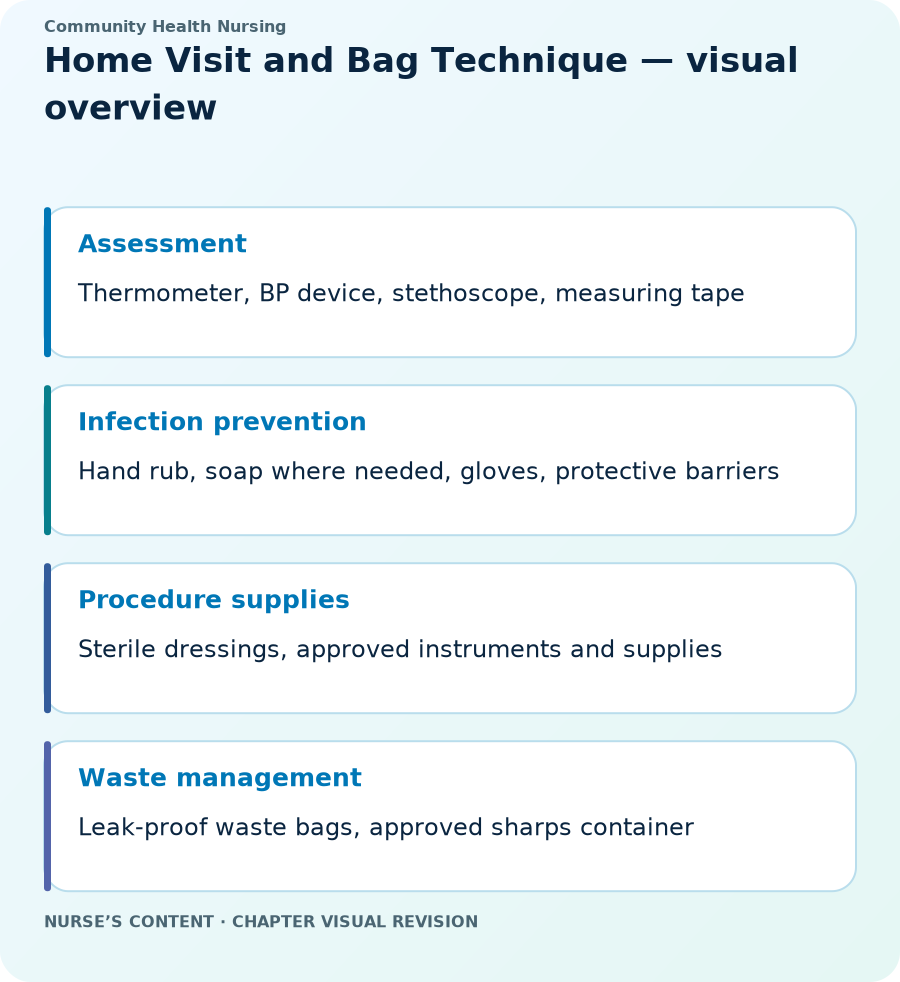
| Category | Examples |
|---|---|
| Assessment | Thermometer, BP device, stethoscope, measuring tape |
| Infection prevention | Hand rub, soap where needed, gloves, protective barriers |
| Procedure supplies | Sterile dressings, approved instruments and supplies |
| Waste management | Leak-proof waste bags, approved sharps container |
| Documentation | Family forms, referral slips, authorized digital device |
Select contents for the planned visit; keep sterile items separate from used or contaminated equipment. Avoid carrying unnecessary medicines or returning unused contaminated items to clean stock.
6. Bag technique: practical procedure
- • Select a dry, clean, stable surface away from children, pets and food. Place a clean barrier and set the bag on it.
- • Perform hand hygiene before accessing clean supplies. Remove only required items; close bag before patient contact.
- • Set up a clean or sterile field appropriate to the procedure; use PPE based on exposure risk.
- • Separate used instruments and waste from clean supplies. Dispose of sharps immediately in a puncture-resistant container; never recap routinely.
- • Remove PPE safely, perform hand hygiene, disinfect reusable equipment as instructed, and repack only clean/dry items.
- • Remove the barrier safely; take clinical waste to approved disposal arrangements rather than leaving hazardous waste with the family.
7. Documentation and evaluation
Record date, purpose, consent, baseline findings, intervention, results, education, referrals and planned review. Evaluate whether the intended outcome was achieved and whether unresolved barriers require another visit. Record refusals respectfully without falsifying a completed service.
8. Home visit sequence and supplies
| Phase | Activities |
|---|---|
| Preparation | Review records, verify address, arrange visit, pack clean supplies and approved waste containers. |
| Introduction | Identify yourself, confirm patient identity and obtain permission to enter and provide care. |
| Assessment | Establish immediate safety, assess individual and household needs and agree on priorities. |
| Intervention | Provide authorized care, education and referral while preventing cross-contamination. |
| Closure | Review findings and warning signs, confirm next contact and document. |
Bag technique safety
Place the bag on a clean, dry surface protected by a clean barrier when needed. Remove only required items with clean hands. Keep used articles separate from clean supplies; do not return contaminated equipment directly to the bag. Use hand hygiene between tasks and after glove removal. Dispose of sharps immediately in an approved puncture-resistant container. Clean and restock equipment after the visit according to policy.
9. Practical assessment example
A nurse visits a family for a wound dressing. The household has no clean table. Ask permission to identify a protected work area, use a suitable clean barrier, assess wound and pain, and perform the prescribed technique. If a sterile field cannot be maintained or the wound appears seriously infected, arrange facility-based care. Document the assessment, intervention, disposal and next review. The bag technique serves infection prevention, not an inflexible ritual.
10. Important Examination Questions
Long Answer Questions
- 1. Define home visit, explain principles and steps, and demonstrate bag technique.
- 2. Explain a home visit from preparation through evaluation, using a wound-care scenario.
- 3. Describe methods of preventing cross-contamination during home nursing.
Short Answer Questions
- 1. Contents of bag
- 2. prevention of cross-infection
- 3. home visit report
- 4. Bag placement and clean barrier.
- 5. Evaluation of a home visit.
- 6. Handling contaminated equipment.
Very Short Answer Questions (with answers)
- 1. First step at home? Introduction and permission.
- 2. Used sharps container? Puncture-resistant approved container.
- 3. Clean and dirty supplies? Separate.
- 4. What is the purpose of bag technique? — Safe and organized community care with infection prevention.
- 5. Where should used sharps go? — An approved sharps container.
11. Quick Revision
- • Home visits require consent, privacy and safety.
- • Separate clean and contaminated articles.
- • Hand hygiene is necessary even when gloves are used.
- • Document referrals and confirm follow-up.
Conclusion
Correct preparation, aseptic practice and follow-up make home visits safe and effective.
Chapter reference images