Community Health Nursing
Geriatric and Rehabilitation Health Services
Health needs of older adults, common geriatric problems, home-based care, rehabilitation, disability prevention, palliative care, social support and nursing responsibilities.
Open quizzes and study tools Download PDF
CHAPTER 17 / COMMUNITY HEALTH NURSING 17. Geriatric and Rehabilitation Health Services
1. Introduction and definitions
Geriatric healthcare addresses the health needs of older adults, commonly defined in Indian programmes as people aged 60 years and above. Rehabilitation is a process of optimizing functioning and reducing disability through coordinated interventions. Healthy ageing emphasizes functional ability, participation, dignity and supportive environments, not simply freedom from disease.
2. Common health needs and problems
| Area | Common problems | Nursing approach |
|---|---|---|
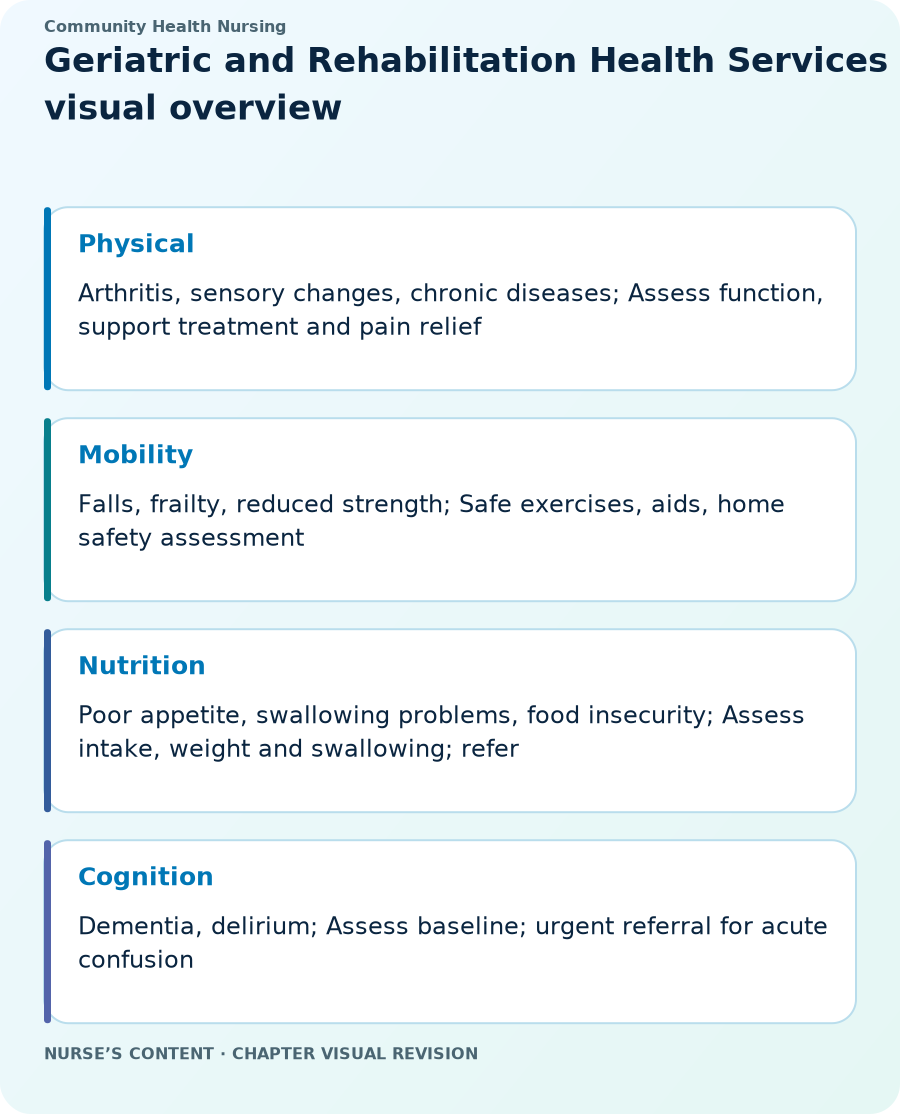
| Physical | Arthritis, sensory changes, chronic diseases | Assess function, support treatment and pain relief |
| Mobility | Falls, frailty, reduced strength | Safe exercises, aids, home safety assessment |
| Nutrition | Poor appetite, swallowing problems, food insecurity | Assess intake, weight and swallowing; refer |
| Cognition | Dementia, delirium | Assess baseline; urgent referral for acute confusion |
| Psychosocial | Loneliness, bereavement, depression | Social support and mental health assessment |
| Medication | Polypharmacy, adverse effects | Reconcile medicines and monitor response |
3. Comprehensive geriatric assessment
Assess medical history, cognition, mood, nutrition, mobility and fall risk, continence, sensory function, medication use, activities of daily living (ADL), instrumental ADL, caregiver support and home environment. ADL include bathing, dressing, feeding and toileting; IADL include shopping, managing medicines, finances, cooking and transport. Katz ADL and Lawton IADL are common assessment frameworks. Screening results require clinical context.
4. Home-based geriatric care
Maintain medication lists and appointment plans; assess gait, lighting, loose rugs, stairs and bathroom safety; encourage strength and balance activity appropriate to ability; ensure access to hearing/vision aids; support oral care, hydration and nutrition. Assess caregiver burden and possible neglect or abuse. Respect the adult's autonomy and avoid assuming that age indicates incapacity.
5. Rehabilitation and disability prevention
| Type | Example |
|---|---|
| Physical | Physiotherapy, gait training, joint mobility |
| Occupational | Adapted daily activities and assistive devices |
| Speech/swallowing | Communication and dysphagia rehabilitation |
| Psychological | Adjustment support and coping |
| Social/vocational | Participation, accessibility and employment support |
Goals should be functional, measurable and agreed with the patient. Prevention includes prompt treatment of reversible limitations, fall prevention, skin care, safe mobilization and management of chronic disease. Community-based rehabilitation connects individuals with local resources and promotes inclusion.
6. Palliative care
Palliative care aims to relieve suffering and improve quality of life in serious illness; it may be provided alongside disease-directed treatment. Assess pain, breathlessness, emotional and spiritual concerns, patient goals and family needs. Support prescribed symptom control, privacy, advance care discussions and referral to specialist services. Bereavement support extends to the family as appropriate.
7. Health programmes and nursing responsibilities
NPHCE (National Programme for Health Care of the Elderly) supports geriatric services across levels of care. Nurses assess function, educate families, arrange referrals, support rehabilitation, identify elder abuse, provide home follow-up and coordinate social welfare resources. Sudden weakness, chest pain, breathlessness, falls with head injury or acute confusion requires urgent evaluation.
8. Functional assessment and healthy ageing
Geriatric assessment evaluates function, not merely disease count. Activities of daily living (ADLs) include basic self-care such as bathing, dressing, toileting and feeding. Instrumental ADLs include activities such as shopping, transport, managing medicines and finances. Assess the person's own goals, accessibility and available support.
| Domain | Nursing assessment |
|---|---|
| Mobility | Gait, falls, strength, assistive devices and hazards. |
| Cognition | Baseline status, memory concerns and sudden changes. |
| Medication | Reconciliation, adverse effects, adherence and access. |
| Nutrition | Intake, swallowing, weight changes and hydration. |
| Psychosocial | Loneliness, depression, caregiver support and possible abuse. |
| Home environment | Lighting, obstacles, handrails, accessible toilet and emergency contacts. |
9. Rehabilitation and palliative care example
An older adult recovering from stroke has difficulty bathing and dressing. Work with the rehabilitation team on individualized goals, safe transfers and caregiver training. Arrange appropriate equipment and follow-up; avoid doing all tasks for the person if supported independence is safe. If the person also has serious illness, palliative care can address symptoms and quality of life alongside rehabilitative or disease-directed care.
Clinical warning signs
Sudden confusion, new weakness, falls with head injury, acute breathlessness and marked functional decline require timely assessment. Do not assume these are normal consequences of ageing.
10. Important Examination Questions
Long Answer Questions
- 1. Explain health problems of older adults, comprehensive assessment and rehabilitation nursing.
- 2. Explain a community-based comprehensive geriatric assessment.
- 3. Discuss rehabilitation and palliative nursing for a dependent older adult.
Short Answer Questions
- 1. ADL vs IADL
- 2. fall prevention
- 3. palliative care
- 4. NPHCE
- 5. ADL and IADL.
- 6. Fall prevention.
- 7. Caregiver support.
- 8. Home-based palliative care.
Very Short Answer Questions (with answers)
- 1. Indian programme elderly age? 60 years and above.
- 2. Acute fluctuating inattention? Delirium.
- 3. Care to relieve serious-illness suffering? Palliative care.
- 4. Is dementia an inevitable part of ageing? — No.
- 5. What is the primary goal of rehabilitation? — Optimal function and participation.
11. Quick Revision
- • Assess functional ability and preferences.
- • Sudden cognitive decline is not normal ageing.
- • Promote safe independence and accessibility.
- • Support caregivers without compromising patient autonomy.
Conclusion
Geriatric nursing promotes dignity and function through prevention, rehabilitation and person-centred support.
Chapter reference images