Community Health Nursing
Community Mental Health Nursing
Mental health promotion, prevention of mental illness, identification of mental health problems, community-based psychiatric care, rehabilitation, referral and national mental health initiatives.
Open quizzes and study tools Download PDF
CHAPTER 21 / COMMUNITY HEALTH NURSING 21. Community Mental Health Nursing
1. Definition and objectives
Community mental health nursing promotes psychological well-being, prevents mental health problems, identifies distress early, provides continuing care and supports recovery within people's communities. Objectives include access, social inclusion, reduced stigma, prevention of crises and improved functioning.
2. Determinants and warning signs
Mental health is influenced by biological factors, chronic illness, trauma, stress, poverty, discrimination, relationships and access to care. Protective factors include supportive relationships, safe environments, meaningful activities and timely services. Warning signs include persistent low mood, excessive anxiety, loss of interest, sleep/appetite changes, impaired functioning, substance misuse, unusual perceptions and marked behaviour changes. Symptoms require assessment, not automatic diagnosis.
3. Levels of prevention
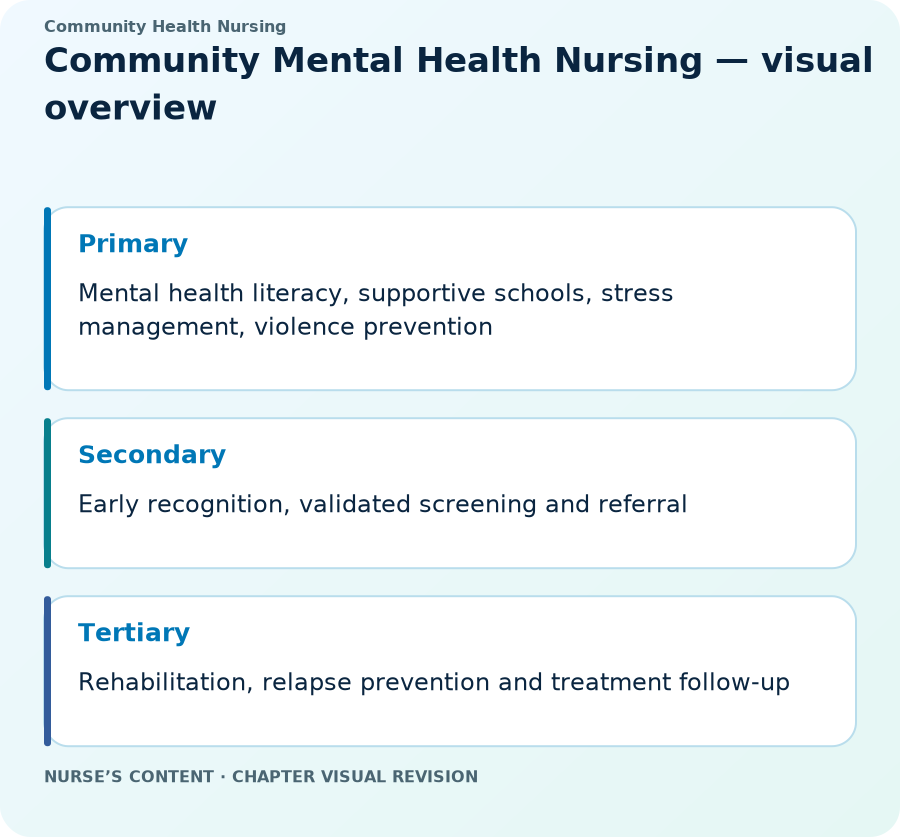
| Level | Examples |
|---|---|
| Primary | Mental health literacy, supportive schools, stress management, violence prevention |
| Secondary | Early recognition, validated screening and referral |
| Tertiary | Rehabilitation, relapse prevention and treatment follow-up |
Promote social participation, support caregivers and address discrimination at all levels.
4. Community-based psychiatric care
Assess mental state, coping, safety, medical conditions, medicines, substance use and family/social supports. Use therapeutic communication and agreed care plans. Facilitate access to district mental health teams, primary care, specialist services and community rehabilitation. Monitor treatment response and side effects without changing prescribed psychiatric medicines independently. Sudden confusion may represent delirium or medical illness and requires urgent assessment.
5. Crisis and suicide prevention
Ask directly and respectfully about suicidal thoughts if clinically indicated; assess immediate intent, plan, access to means and protective supports. Imminent risk, recent serious self-harm, dangerous command hallucinations, severe agitation or inability to remain safe require urgent emergency assessment. Do not leave a person at imminent risk alone; arrange safe supervision and emergency referral; reduce access to hazards when safe and follow authorized protocols. Provide non-judgmental support and preserve dignity.
6. Rehabilitation and community participation
Support activities of daily living, social skills, education, vocational participation, medication management, caregiver education and relapse prevention plans. Recovery is individualized and may coexist with ongoing symptoms. Encourage peer support, family involvement with consent and community inclusion; avoid unnecessary institutionalization or restraint.
7. National mental health initiatives
NMHP (National Mental Health Programme) promotes access and integration of mental healthcare. DMHP provides district-level services, outreach and referral. Tele-MANAS offers tele-mental health support and linkage; in India the established helpline is 14416. Emergency situations require local emergency care rather than relying solely on tele-counselling. The Mental Healthcare Act, 2017 recognizes rights including dignity, access, confidentiality and safeguards for treatment. Follow applicable laws and institutional policy. [11,12]
8. Role of nurses
Promote mental health education, identify risk, screen when trained, provide therapeutic communication, support treatment adherence, refer urgent cases, document, coordinate family and community resources and advocate for rights.
9. Community mental health assessment and support
Observe changes in mood, attention, sleep, appetite, behaviour, self-care, social functioning and ability to perform daily activities. Ask about substance use, physical illness, medicines, stressors and available support when relevant. Screening instruments may identify possible difficulties, but do not independently establish diagnosis. Sudden confusion or reduced consciousness may have an acute medical cause.
| Level of support | Examples |
|---|---|
| Promotion | Mental health literacy, supportive relationships and stigma reduction. |
| Early identification | Recognize functional decline or persistent distress; arrange assessment. |
| Treatment support | Support clinician-directed care, medication review and follow-up. |
| Rehabilitation | Social participation, daily living skills, supported work or education. |
| Crisis response | Immediate safety assessment and urgent clinical referral. |
10. Community follow-up example
A person receiving treatment for depression misses follow-up and reports worsening hopelessness. Contact respectfully, assess immediate safety, including suicidal thoughts when indicated, and arrange appropriate urgent assessment. Do not leave someone at imminent risk unattended; coordinate emergency help and appropriate support. With consent, involve trusted support persons and develop a plan for practical access to care. Document factual findings without stigmatizing language.
Stigma and rehabilitation
Stigma may delay healthcare-seeking and reduce employment or social participation. Treat people with dignity, support informed decisions, avoid labeling and maintain confidentiality within legal and safety requirements. Rehabilitation should be based on the person's goals, not on assumptions about capability.
11. Important Examination Questions
Long Answer Questions
- 1. Explain community mental health care, prevention, rehabilitation and national initiatives.
- 2. Explain community-based mental health assessment, crisis referral and rehabilitation.
- 3. Describe the role of a community nurse in maintaining continuity of psychiatric care.
Short Answer Questions
- 1. DMHP
- 2. Tele-MANAS
- 3. stigma reduction
- 4. suicide risk escalation
- 5. rehabilitation
- 6. Mental health screening.
- 7. Stigma reduction.
- 8. Psychosocial rehabilitation.
- 9. Crisis safety assessment.
Very Short Answer Questions (with answers)
- 1. DMHP? District Mental Health Programme.
- 2. NMHP? National Mental Health Programme.
- 3. Early detection is which level? Secondary.
- 4. Can a screening score alone diagnose mental illness? — No.
- 5. What is a major aim of rehabilitation? — Recovery-oriented functioning and participation.
12. Quick Revision
- • Identify psychological and possible medical causes of behavioural changes.
- • Use respectful, recovery-oriented care.
- • Escalate immediate safety concerns promptly.
- • Community follow-up supports continuity and social inclusion.
Conclusion
Accessible, rights-based community mental healthcare supports safety, recovery and social inclusion.
Chapter reference images