Child Health Nursing
Palliative Care and End-of-Life Care in Children
Principles of paediatric palliative care, pain and symptom management, emotional support, family counselling, bereavement care and ethical considerations.
Open quizzes and study tools Download PDF
CHAPTER 25 / CHILD HEALTH NURSING 25. Palliative Care and End-of-Life Care in Children
1. Definition and aims
Paediatric palliative care is active holistic support for children with serious or life-limiting illness and their families. It can start at diagnosis and occur with disease-directed treatment. Objectives are pain and symptom relief, quality of life, participation, family support and care aligned with goals.
2. Assessment and symptom management
| Symptom | Nursing response |
|---|---|
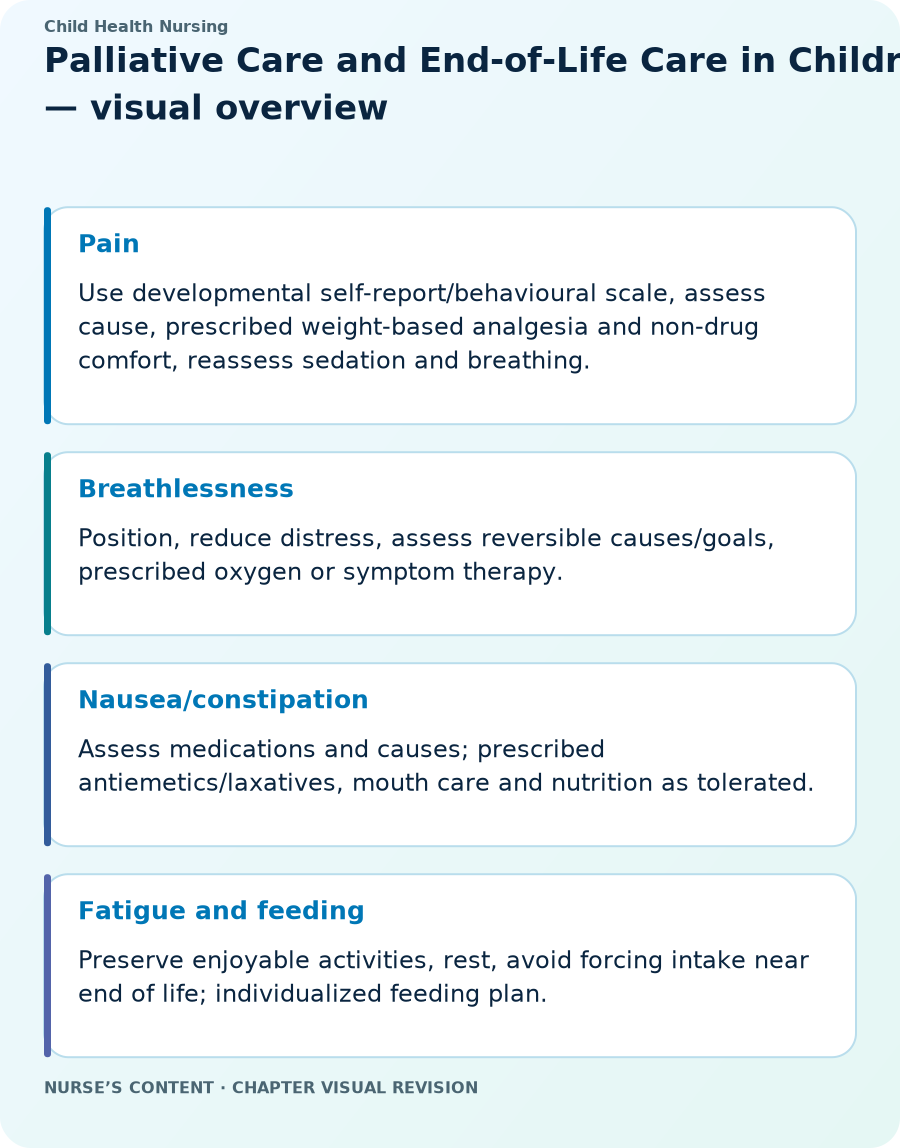
| Pain | Use developmental self-report/behavioural scale, assess cause, prescribed weight-based analgesia and non-drug comfort, reassess sedation and breathing. |
| Breathlessness | Position, reduce distress, assess reversible causes/goals, prescribed oxygen or symptom therapy. |
| Nausea/constipation | Assess medications and causes; prescribed antiemetics/laxatives, mouth care and nutrition as tolerated. |
| Fatigue and feeding | Preserve enjoyable activities, rest, avoid forcing intake near end of life; individualized feeding plan. |
| Anxiety or agitation | Familiar people, child-friendly explanations, calm environment and assessment for pain/delirium. |
3. Communication, ethics and family
Communicate honestly in age-appropriate terms, ask what child and family understand and value, use shared decision-making with appropriate consent/assent. Discuss goals and legally appropriate limits/resuscitation decisions with responsible team; do not equate comfort care with abandonment. Provide spiritual/cultural support by preference, sibling inclusion, memory-making when desired and psychosocial support. Bereavement care acknowledges varied grief reactions and offers follow-up.
4. Nursing role
Coordinate home/hospital teams, symptom and emergency plans, medication safety, accessible equipment, respite and support. Ensure privacy, dignity and ongoing comfort in dying; document decisions, symptom assessments, medicines and response; after-death care follows law/policy and family preferences.
5. Important Examination Questions
Long Answer Questions
- 1. Explain paediatric palliative care principles and nursing responsibilities.
Short Answer Questions
- 1. Describe pain assessment
- 2. discuss family and sibling support
- 3. explain assent in serious illness.
Very Short Answer Questions (with answers)
- 1. Can palliative care coexist with cancer treatment? — Yes.
- 2. What is bereavement? — Experience of loss after death.
6. Quick Revision
- • Treat the child and support the family.
- • Manage symptoms actively.
- • Respect evolving autonomy and goals of care.
7. Conclusion
Treat the child and support the family. Manage symptoms actively. Respect evolving autonomy and goals of care.
Chapter reference images