Child Health Nursing
Hospitalised Child and Family-Centred Care
Effects of hospitalisation, separation anxiety, play therapy, therapeutic communication, preparation for procedures, pain assessment and psychological support for children and families.
Open quizzes and study tools Download PDF
CHAPTER 22 / CHILD HEALTH NURSING 22. Hospitalised Child and Family-Centred Care
1. Effects of hospitalization
Unfamiliar environment, pain, separation, loss of control, interrupted routines and peer/school separation can cause anxiety, regression, sleep disturbance or withdrawal. Young children may show protest, despair and detachment in historical separation descriptions; responses vary and are not fixed stages. Adolescents may be concerned about privacy, identity and peers.
2. Family-centred and atraumatic care
Respect family knowledge and preferences, share accurate information, facilitate caregiver presence and participation when safe, provide interpreters and shared decisions. Maintain child privacy and assent, prepare for transitions and avoid deception. Atraumatic care reduces physical and psychological distress while completing necessary treatment.
3. Preparation and therapeutic play
| Age | Helpful methods |
|---|---|
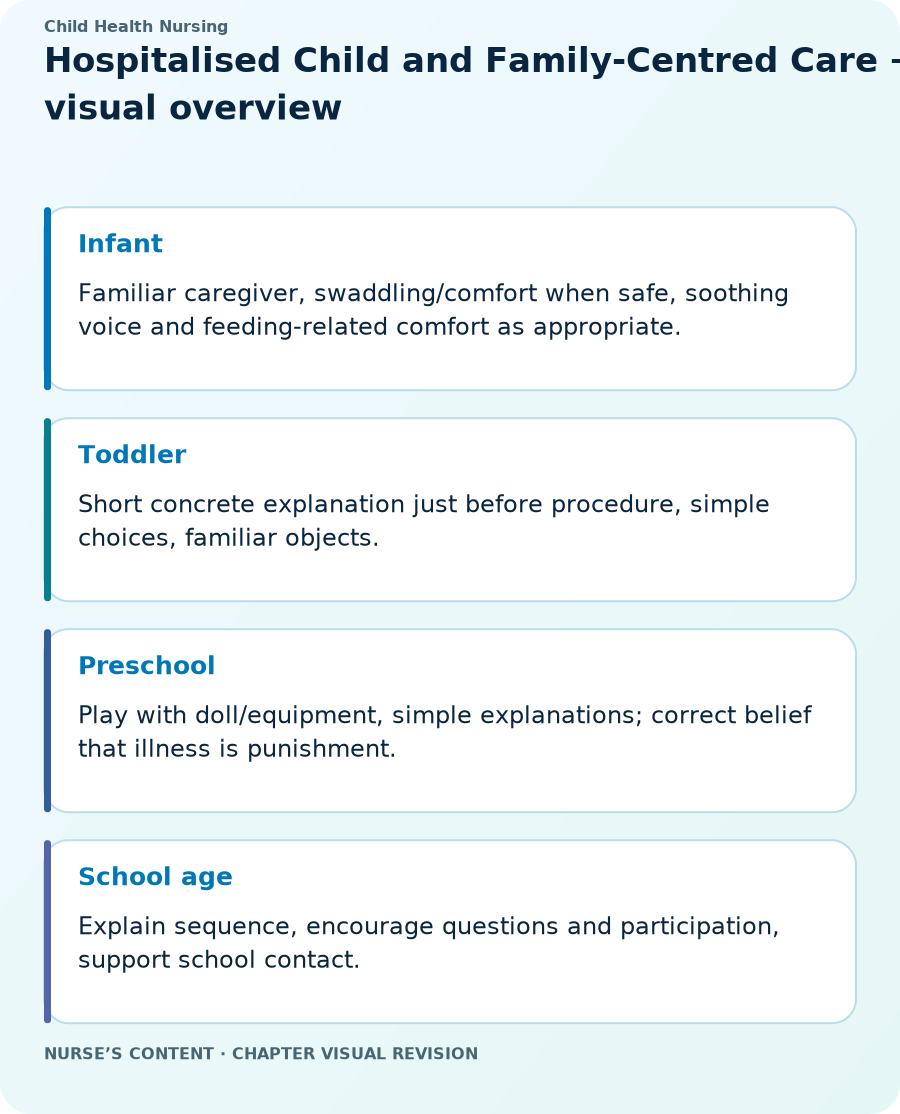
| Infant | Familiar caregiver, swaddling/comfort when safe, soothing voice and feeding-related comfort as appropriate. |
| Toddler | Short concrete explanation just before procedure, simple choices, familiar objects. |
| Preschool | Play with doll/equipment, simple explanations; correct belief that illness is punishment. |
| School age | Explain sequence, encourage questions and participation, support school contact. |
| Adolescent | Privacy, autonomy, accurate information, involve in decisions and peer connection. |
Therapeutic play uses safe materials to express emotions, teach and rehearse procedures. Avoid making play punitive or sharing contaminated toys without cleaning.
4. Pain and psychological support
Use self-report when developmentally able (faces or numerical scale); FLACC in appropriate non-verbal children, neonatal tools in newborns. Combine analgesia with distraction, comfort positioning, caregiver support, breathing and procedure preparation. Monitor pain and adverse effects, reassess. Identify caregiver stress, provide accommodation and practical resources/referrals.
5. Important Examination Questions
Long Answer Questions
- 1. Explain psychological effects of hospitalization and family-centred care.
Short Answer Questions
- 1. Describe therapeutic play
- 2. explain procedural preparation by age
- 3. list pain assessment scales.
Very Short Answer Questions (with answers)
- 1. What does FLACC stand for? — Face, legs, activity, cry, consolability.
- 2. Is pain scale chosen by development? — Yes.
6. Quick Revision
- • Prepare honestly and developmentally.
- • Support caregiver presence.
- • Reassess pain and coping.
7. Conclusion
Prepare honestly and developmentally. Support caregiver presence. Reassess pain and coping.
Chapter reference images