Child Health Nursing
Skin and Sensory Disorders
Eczema, scabies, impetigo, burns, conjunctivitis, otitis media, visual impairment, hearing impairment and nursing care of children with sensory problems.
Open quizzes and study tools Download PDF
CHAPTER 16 / CHILD HEALTH NURSING 16. Skin and Sensory Disorders
1. Assessment
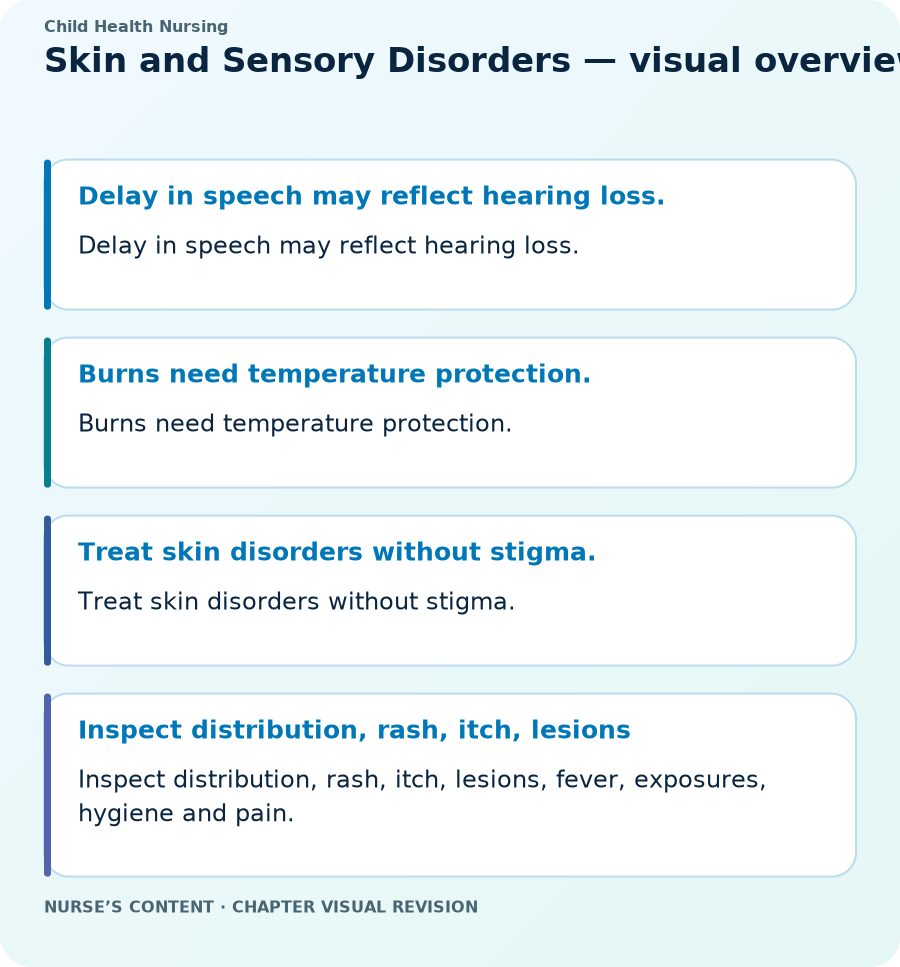
Inspect distribution, rash, itch, lesions, fever, exposures, hygiene and pain. Assess hearing/vision changes, communication and milestones. Skin and sensory problems affect sleep, learning and family functioning.
Eczema
Definition and pathophysiology: Chronic inflammatory skin barrier disorder, often atopic.
Clinical features and investigations: Dry itchy skin, age-dependent distribution, flares and infection risk.
Management and nursing care: Emollients, gentle washing, prescribed topical anti-inflammatory therapy; teach quantity/application, avoid irritants. Painful rapidly spreading vesicles or fever may indicate severe infection.
Scabies and impetigo
Definition and pathophysiology: Scabies mite infestation; impetigo superficial bacterial infection.
Clinical features and investigations: Scabies nocturnal itch/burrows, affected contacts; impetigo honey-coloured crust or bullae.
Management and nursing care: Prescribed scabicide and household contact management, laundering per guidance; impetigo hygiene and antibiotics based on extent. Avoid stigma and unnecessary school exclusion beyond policy.
Burns
Definition and pathophysiology: Thermal, electrical or chemical injury; children have higher heat loss risks.
Clinical features and investigations: Pain, blistering, swelling, variable depth; Lund–Browder chart preferred for size.
Management and nursing care: Stop exposure, cool thermal burns with running water around 20 min if feasible while preventing hypothermia, no ice or home remedies, cover and urgent evaluation of significant burns. Assess airway and safeguarding; prescribed fluid and pain therapy.
Conjunctivitis and visual impairment
Definition and pathophysiology: Infective/allergic conjunctival inflammation or refractive/structural visual disorder.
Clinical features and investigations: Redness/discharge; painful eye or reduced vision urgent; abnormal red reflex needs specialist assessment.
Management and nursing care: Hygiene, cause-based treatment, glasses/low-vision aids, screening and educational accommodations.
Otitis media and hearing impairment
Definition and pathophysiology: Middle-ear infection/effusion or conductive/sensorineural hearing loss.
Clinical features and investigations: Ear pain, fever, reduced hearing; delayed speech or absent sound response.
Management and nursing care: Pain relief, antibiotics when indicated, audiology/ENT referral for persistent effusion or hearing loss, hearing aids/communication support. Newborn hearing screening and follow-up.
2. Nursing responsibilities
Teach safe skin care and medication use, prevent infection spread, provide accessible communication and play, coordinate school accommodations, monitor developmental impact and referral. Protect a child with sensory impairment from falls or unsafe environmental exposure without limiting autonomy unnecessarily.
3. Important Examination Questions
Long Answer Questions
- 1. Describe eczema, scabies and burns management.
Short Answer Questions
- 1. Explain otitis media and hearing assessment
- 2. list urgent visual warning signs.
Very Short Answer Questions (with answers)
- 1. What is impetigo? — Superficial bacterial skin infection.
- 2. Is ice suitable for burns? — No.
4. Quick Revision
- • Delay in speech may reflect hearing loss.
- • Burns need temperature protection.
- • Treat skin disorders without stigma.
5. Conclusion
Delay in speech may reflect hearing loss. Burns need temperature protection. Treat skin disorders without stigma.
Chapter reference images