Child Health Nursing
Endocrine and Metabolic Disorders
Type 1 diabetes mellitus, congenital hypothyroidism, growth hormone deficiency, diabetic ketoacidosis and common metabolic disorders in children.
Open quizzes and study tools Download PDF
CHAPTER 14 / CHILD HEALTH NURSING 14. Endocrine and Metabolic Disorders
1. Assessment
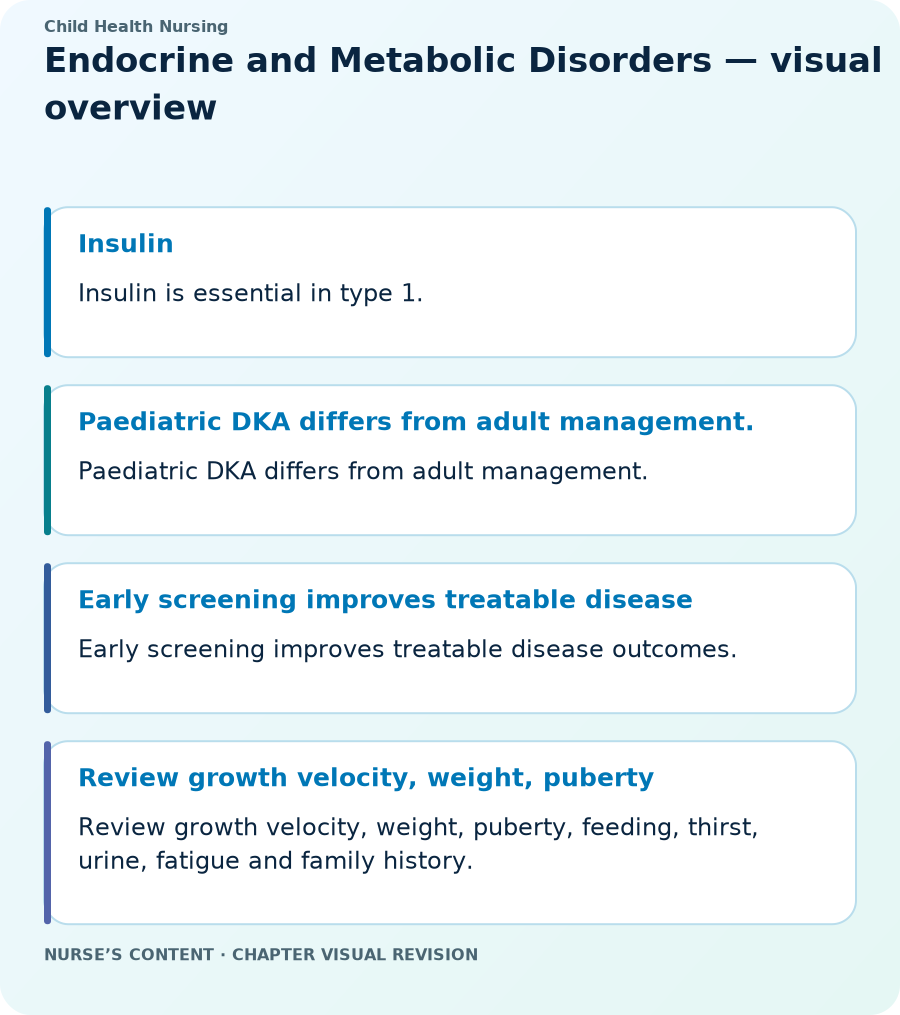
Review growth velocity, weight, puberty, feeding, thirst, urine, fatigue and family history. Use age-specific growth charts, glucose, ketones, thyroid and other specialist tests. Hormone deficiencies can affect development before overt symptoms.
Type 1 diabetes
Definition and pathophysiology: Autoimmune beta-cell loss causes insulin deficiency.
Clinical features and investigations: Polyuria, polydipsia, weight loss, fatigue, possible DKA; glucose/HbA1c and relevant tests.
Management and nursing care: Prescribed insulin, glucose monitoring, carbohydrate education, school plan, exercise and sick-day advice. Teach hypoglycaemia recognition and management with age-appropriate fast carbohydrate if safe to swallow; glucagon/IV glucose per emergency plan if not safe.
Paediatric DKA
Definition and pathophysiology: Ketone production and acidosis from insulin deficiency, with dehydration.
Clinical features and investigations: Vomiting, abdominal pain, deep breathing, altered consciousness; blood glucose/ketones, venous pH/bicarbonate, electrolytes.
Management and nursing care: Urgent paediatric DKA protocol: carefully calculated fluids, insulin and potassium management, frequent neuro/glucose/electrolyte monitoring. Do not use adult fluid or insulin bolus routines. Headache, bradycardia, declining alertness may indicate cerebral injury, urgent specialist response.
Congenital hypothyroidism
Definition and pathophysiology: Thyroid hormone deficiency present at birth.
Clinical features and investigations: Often asymptomatic; prolonged jaundice, poor feeding, constipation, hypotonia later; newborn screening and confirmatory TSH/free T4.
Management and nursing care: Prompt prescribed levothyroxine prevents avoidable neurodevelopmental injury; teach accurate dosing and serial labs/growth follow-up.
Growth hormone deficiency
Definition and pathophysiology: Insufficient GH secretion or related pathway impairment.
Clinical features and investigations: Reduced linear growth velocity, delayed bone age, sometimes other pituitary symptoms.
Management and nursing care: Specialist endocrine tests, prescribed GH when indicated; monitor growth, therapy effects and adherence.
Inherited metabolic disorders
Definition and pathophysiology: Enzyme/pathway defects such as PKU, galactosaemia and fatty-acid oxidation disorders.
Clinical features and investigations: Feeding intolerance, vomiting, hypoglycaemia, unusual lethargy, developmental changes; newborn/targeted screening.
Management and nursing care: Urgent metabolic assessment in decompensation, disorder-specific nutrition and emergency plans. Do not apply generic fasting or protein restriction to all conditions.
2. Nursing priorities
Measure glucose promptly in altered consciousness, prevent missed insulin, verify insulin units/concentration, document growth and treatment, coordinate school/caregiver support and referral. Explain family-centred care and avoid blame for diabetes or growth disorders.
3. Important Examination Questions
Long Answer Questions
- 1. Explain type 1 diabetes and DKA in children with nursing management.
Short Answer Questions
- 1. Discuss congenital hypothyroidism
- 2. explain growth velocity
- 3. list hypoglycaemia signs.
Very Short Answer Questions (with answers)
- 1. What is DKA? — Diabetic ketoacidosis.
- 2. Is newborn hypothyroidism always symptomatic? — No.
4. Quick Revision
- • Insulin is essential in type 1.
- • Paediatric DKA differs from adult management.
- • Early screening improves treatable disease outcomes.
5. Conclusion
Insulin is essential in type 1. Paediatric DKA differs from adult management. Early screening improves treatable disease outcomes.
Chapter reference images