Child Health Nursing
Hematological Disorders
Iron-deficiency anaemia, sickle cell disease, thalassaemia, haemophilia, leukaemia, bleeding disorders and nursing management of children with blood disorders.
Open quizzes and study tools Download PDF
CHAPTER 13 / CHILD HEALTH NURSING 13. Haematological Disorders
1. Assessment
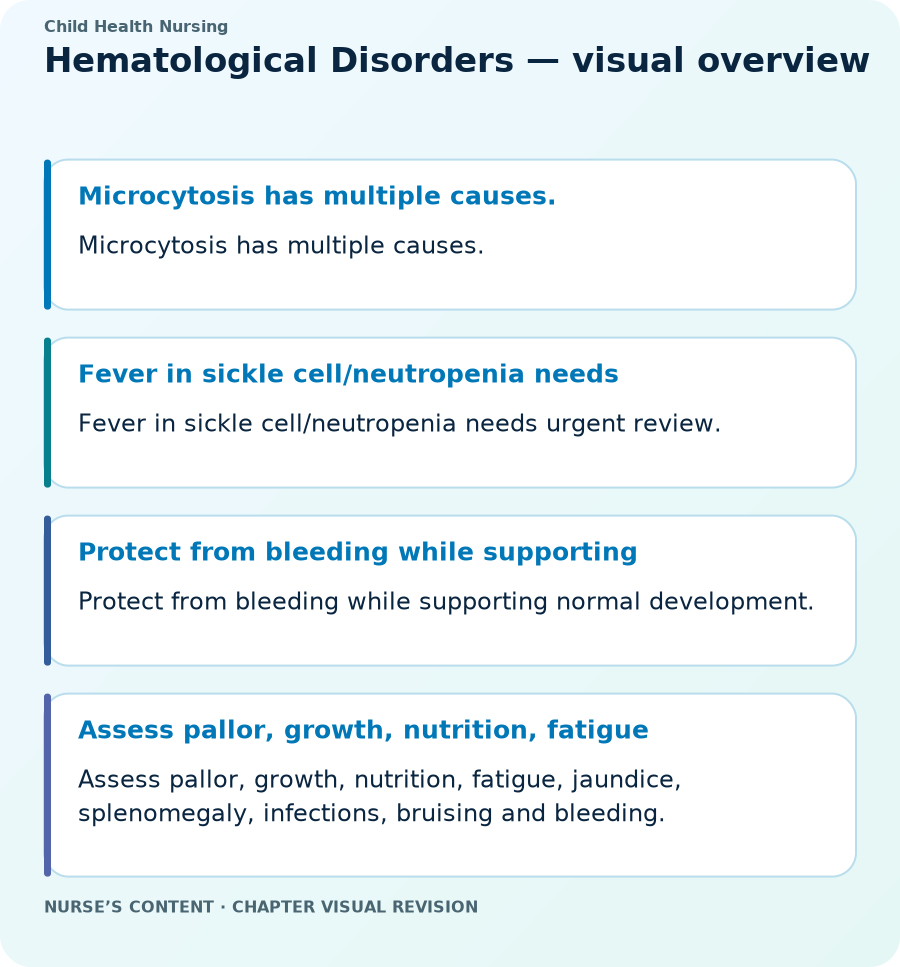
Assess pallor, growth, nutrition, fatigue, jaundice, splenomegaly, infections, bruising and bleeding. CBC/indices, reticulocytes, smear, ferritin, Hb analysis, coagulation and marrow tests as indicated; interpret age-specific Hb ranges.
Iron-deficiency anaemia
Definition and pathophysiology: Iron depletion from low intake, rapid growth or blood loss.
Clinical features and investigations: Pallor, fatigue, pica, microcytosis and low ferritin (interpret inflammation).
Management and nursing care: Age-appropriate iron treatment per prescription, iron-rich foods, avoid excessive cow milk in toddlers, monitor adherence/Hb and investigate cause.
Sickle cell disease
Definition and pathophysiology: Inherited HbS polymerization with haemolysis and vaso-occlusion.
Clinical features and investigations: Anaemia, painful crises, splenic sequestration, acute chest syndrome, stroke and infection risk.
Management and nursing care: Prompt pain relief, appropriate hydration, urgent fever/chest symptoms, prescribed hydroxyurea/prophylaxis and vaccination, disease-specific monitoring and family counselling.
Thalassaemia
Definition and pathophysiology: Inherited reduction in globin chain synthesis.
Clinical features and investigations: Early severe anaemia in major forms, growth issues, splenomegaly, transfusion-related iron overload.
Management and nursing care: Scheduled specialist transfusion/chelation where indicated, monitor growth, cardiac/endocrine/liver complications, genetic counselling.
Haemophilia and bleeding disorders
Definition and pathophysiology: Factor VIII/IX deficiency; other causes include platelet disorders such as ITP.
Clinical features and investigations: Joint/deep bleeding in haemophilia; petechiae/mucosal bleeding in thrombocytopenia; coagulation/factor tests.
Management and nursing care: Prescribed factor treatment, injury prevention without unnecessary restriction, avoid contraindicated medicines/injections; urgent head injury review. ITP treatment depends on bleeding severity.
Leukaemia
Definition and pathophysiology: Malignant marrow/blood cell proliferation; ALL common in children.
Clinical features and investigations: Fever, pallor, bruises, bone pain, lymphadenopathy; CBC, marrow/flow and staging tests.
Management and nursing care: Protocol-based chemotherapy support, infection and bleeding precautions, monitor lysis and nutrition, school/play support. Fever with neutropenia emergency.
2. Transfusion nursing
Confirm identity, product/compatibility, weight-based volume/rate order and consent. Monitor baseline and early response, prevent overload; stop and escalate suspected reaction. Document lot, time, observations and outcome. Prepare child with explanations and caregiver support.
3. Important Examination Questions
Long Answer Questions
- 1. Discuss iron deficiency, sickle cell and thalassaemia management.
Short Answer Questions
- 1. Explain haemophilia
- 2. list leukaemia manifestations
- 3. describe transfusion reactions.
Very Short Answer Questions (with answers)
- 1. Factor VIII deficiency? — Haemophilia A.
- 2. Common childhood acute leukaemia? — ALL.
4. Quick Revision
- • Microcytosis has multiple causes.
- • Fever in sickle cell/neutropenia needs urgent review.
- • Protect from bleeding while supporting normal development.
5. Conclusion
Microcytosis has multiple causes. Fever in sickle cell/neutropenia needs urgent review. Protect from bleeding while supporting normal development.
Chapter reference images