Child Health Nursing
Renal and Genitourinary Disorders
Urinary tract infections, nephrotic syndrome, acute glomerulonephritis, acute kidney injury, congenital abnormalities of the urinary system and nursing management.
Open quizzes and study tools Download PDF
CHAPTER 11 / CHILD HEALTH NURSING 11. Renal and Genitourinary Disorders
1. Assessment
Assess urine pattern, wet diapers/output in mL/kg/h, fever, dysuria, oedema, BP using correct cuff, weight and hydration. Urinalysis/culture, creatinine, electrolytes, albumin and ultrasound guide assessment. Collect reliable urine specimen before antibiotics if feasible, but do not delay urgent treatment. Paediatric reference values vary with age and size.
UTI
Definition and pathophysiology: Bacterial infection of urinary tract, sometimes associated with reflux/anomaly.
Clinical features and investigations: Infants may have fever, poor feeding; older children dysuria, frequency or flank pain; culture.
Management and nursing care: Prescribed antibiotics and hydration, monitor fever/response, assess recurrence and imaging indications; teach toileting/hygiene without blame.
Nephrotic syndrome
Definition and pathophysiology: Heavy proteinuria from glomerular barrier injury, often minimal change disease in children.
Clinical features and investigations: Periorbital/generalized oedema, hypoalbuminaemia, hyperlipidaemia.
Management and nursing care: Prescribed corticosteroids for selected disease, daily weights, urine protein monitoring, individualized salt/fluid advice. Infection and thrombosis risk; fever/abdominal pain or dyspnoea urgent.
Acute glomerulonephritis
Definition and pathophysiology: Glomerular inflammation, e.g., after streptococcal infection.
Clinical features and investigations: Cola-coloured urine, oedema, hypertension, reduced output; complement and tests.
Management and nursing care: Monitor BP, weight, urine and electrolytes, control overload and hypertension as prescribed; headache/seizure or pulmonary oedema urgent.
AKI
Definition and pathophysiology: Acute kidney dysfunction from dehydration/sepsis, nephrotoxins, glomerular disease or obstruction.
Clinical features and investigations: Reduced output or rising creatinine, fluid/electrolyte problems.
Management and nursing care: Assess cause and volume, avoid nephrotoxins, accurate fluid balance, prescribed therapy/dialysis when indicated; hyperkalaemia emergency.
Congenital urinary abnormalities
Definition and pathophysiology: Vesicoureteral reflux, posterior urethral valves, hydronephrosis, hypospadias or other defects.
Clinical features and investigations: UTI, poor stream, antenatal ultrasound findings or renal impairment.
Management and nursing care: Refer to paediatric urology/nephrology, monitor infections and growth. Avoid circumcision before hypospadias repair assessment; tissue may be needed.
2. Nursing management
Prepare specimens, support prescribed testing and medications, coordinate age-appropriate diet/fluid instructions, monitor skin oedema, maintain play/development and family education. Protect dialysis access where relevant. Assess enuresis without shame; new symptoms may reflect constipation, diabetes or infection.
3. Important Examination Questions
Long Answer Questions
- 1. Compare nephrotic syndrome and glomerulonephritis with nursing management.
Short Answer Questions
- 1. Explain UTI in infants
- 2. list causes of AKI
- 3. describe VUR.
Very Short Answer Questions (with answers)
- 1. What is haematuria? — Blood in urine.
- 2. What is VUR? — Vesicoureteral reflux.
4. Quick Revision
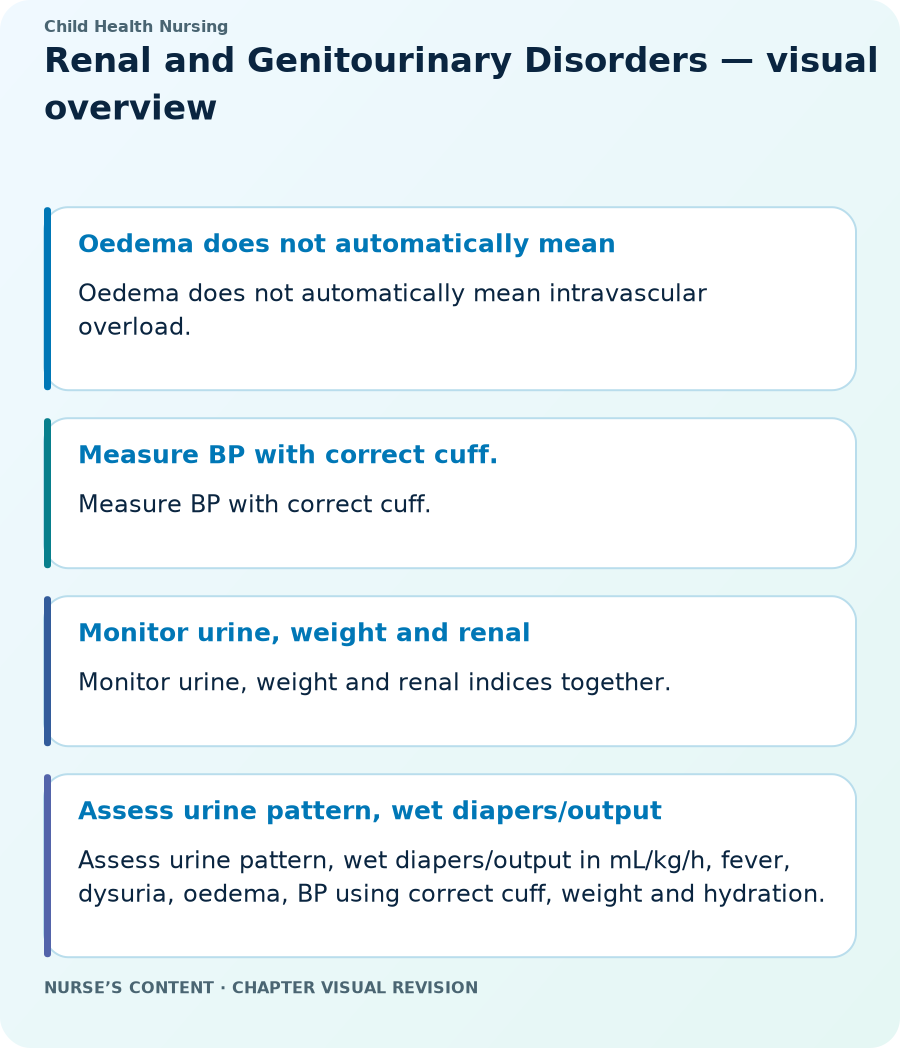
- • Oedema does not automatically mean intravascular overload.
- • Measure BP with correct cuff.
- • Monitor urine, weight and renal indices together.
5. Conclusion
Oedema does not automatically mean intravascular overload. Measure BP with correct cuff. Monitor urine, weight and renal indices together.
Chapter reference images