Child Health Nursing
Respiratory Disorders in Children
Acute respiratory infections, pneumonia, bronchiolitis, asthma, croup, tuberculosis, respiratory distress and nursing management of respiratory conditions.
Open quizzes and study tools Download PDF
CHAPTER 08 / CHILD HEALTH NURSING 08. Respiratory Disorders in Children
1. Assessment
Observe before disturbing the child: respiratory rate, retractions, nasal flaring, grunting, stridor, wheeze, feeding ability, colour, saturation and fatigue. Count breaths for a full minute in infants. Airway diameter is small, and oedema causes substantial obstruction. Severe work of breathing, cyanosis, apnoea, inability to feed or reduced alertness requires urgent escalation.
Acute respiratory infection and pneumonia
Definition and pathophysiology: Upper viral illness or lower lung infection causing inflammation and impaired gas exchange.
Clinical features and investigations: Cough, fever, tachypnoea, chest indrawing, crackles or hypoxia; assess WHO/IMNCI age bands and local criteria; imaging only when indicated.
Management and nursing care: Support oxygenation and hydration, prescribed antibiotics for bacterial pneumonia, monitor feeding, fever and danger signs. Refer severe cases.
Bronchiolitis
Definition and pathophysiology: Usually viral small-airway inflammation in infants, commonly RSV.
Clinical features and investigations: Coryza followed by wheeze/crackles, tachypnoea, difficulty feeding or apnoea.
Management and nursing care: Supportive care, nasal secretion management and hydration, oxygen when indicated. Routine antibiotics, bronchodilators and steroids generally not indicated for typical bronchiolitis.
Asthma
Definition and pathophysiology: Variable airflow obstruction with inflammation.
Clinical features and investigations: Recurrent wheeze, cough, exercise/nocturnal symptoms; age-appropriate spirometry when possible; assess triggers.
Management and nursing care: Prescribed inhaled corticosteroid-containing plan and reliever, spacer technique and action plan. Severe exacerbation requires oxygen/bronchodilator/steroid protocol; poor air entry/exhaustion is emergency.
Croup
Definition and pathophysiology: Viral upper airway inflammation around larynx/subglottis.
Clinical features and investigations: Barking cough, hoarseness, inspiratory stridor; severe stridor at rest/retractions.
Management and nursing care: Keep child calm, avoid distressing procedures; prescribed dexamethasone and nebulized adrenaline for indicated severity, observe recurrence per protocol. Drooling/toxic appearance needs alternate diagnosis.
Tuberculosis
Definition and pathophysiology: Pulmonary or extrapulmonary infection; children often paucibacillary.
Clinical features and investigations: Chronic cough/fever, contact history, poor growth; clinical, molecular and imaging assessment.
Management and nursing care: Programme-based treatment and contact investigation, nutrition and adherence support; age-appropriate infection precautions based on infectiousness.
2. Respiratory nursing plan
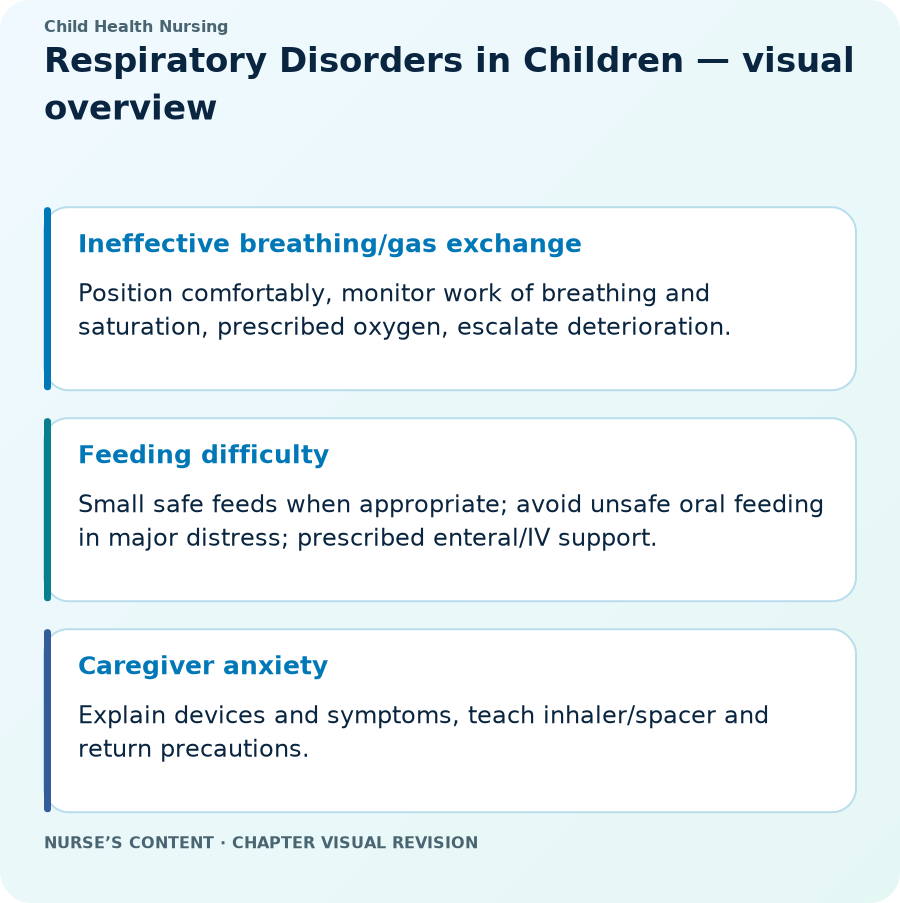
| Problem | Actions and outcome |
|---|---|
| Ineffective breathing/gas exchange | Position comfortably, monitor work of breathing and saturation, prescribed oxygen, escalate deterioration. |
| Feeding difficulty | Small safe feeds when appropriate; avoid unsafe oral feeding in major distress; prescribed enteral/IV support. |
| Caregiver anxiety | Explain devices and symptoms, teach inhaler/spacer and return precautions. |
Use age- and device-specific oxygen targets, document flow, response and reassessment; do not rely on pulse oximetry alone.
3. Important Examination Questions
Long Answer Questions
- 1. Explain pneumonia, asthma and bronchiolitis in children with nursing management.
Short Answer Questions
- 1. Compare croup and lower airway wheeze
- 2. describe signs of respiratory distress
- 3. explain TB contact screening.
Very Short Answer Questions (with answers)
- 1. What is stridor? — High-pitched upper airway sound.
- 2. Are antibiotics routine in bronchiolitis? — No.
4. Quick Revision
- • Assess feeding and respiratory effort together.
- • Keep child calm in upper-airway obstruction.
- • Escalate fatigue early.
5. Conclusion
Assess feeding and respiratory effort together. Keep child calm in upper-airway obstruction. Escalate fatigue early.
Chapter reference images