Child Health Nursing
Nutrition and Feeding in Children
Breastfeeding, colostrum, exclusive breastfeeding, complementary feeding, weaning, nutritional requirements by age, infant feeding problems and assessment of nutritional status.
Open quizzes and study tools Download PDF
CHAPTER 05 / CHILD HEALTH NURSING 05. Nutrition and Feeding in Children
1. Breastfeeding and colostrum
Colostrum is early yellowish milk rich in immune and nutritional factors. WHO recommends early initiation within one hour, exclusive breastfeeding for first six months (no other food or water except indicated medicines/ORS/supplements), complementary feeding from six months and continued breastfeeding to two years or beyond. Breast milk supplies energy, protein, fat, lactose and protective components.
2. Technique and common difficulties
Position child close, head/body aligned, supported; mouth wide, deep attachment with chin near breast, more areola visible above than below in typical latch; observe slow deep sucks and swallowing. Pain, cracked nipples or poor transfer require assessment and latch support. Monitor wet diapers and serial growth. For engorgement support frequent effective feeding, comfort measures and expression when necessary; fever with localized painful breast requires review. Avoid routine formula or bottles without indication; if formula used, teach safe preparation and access.
3. Complementary feeding and age needs
| Age | Feeding principles |
|---|---|
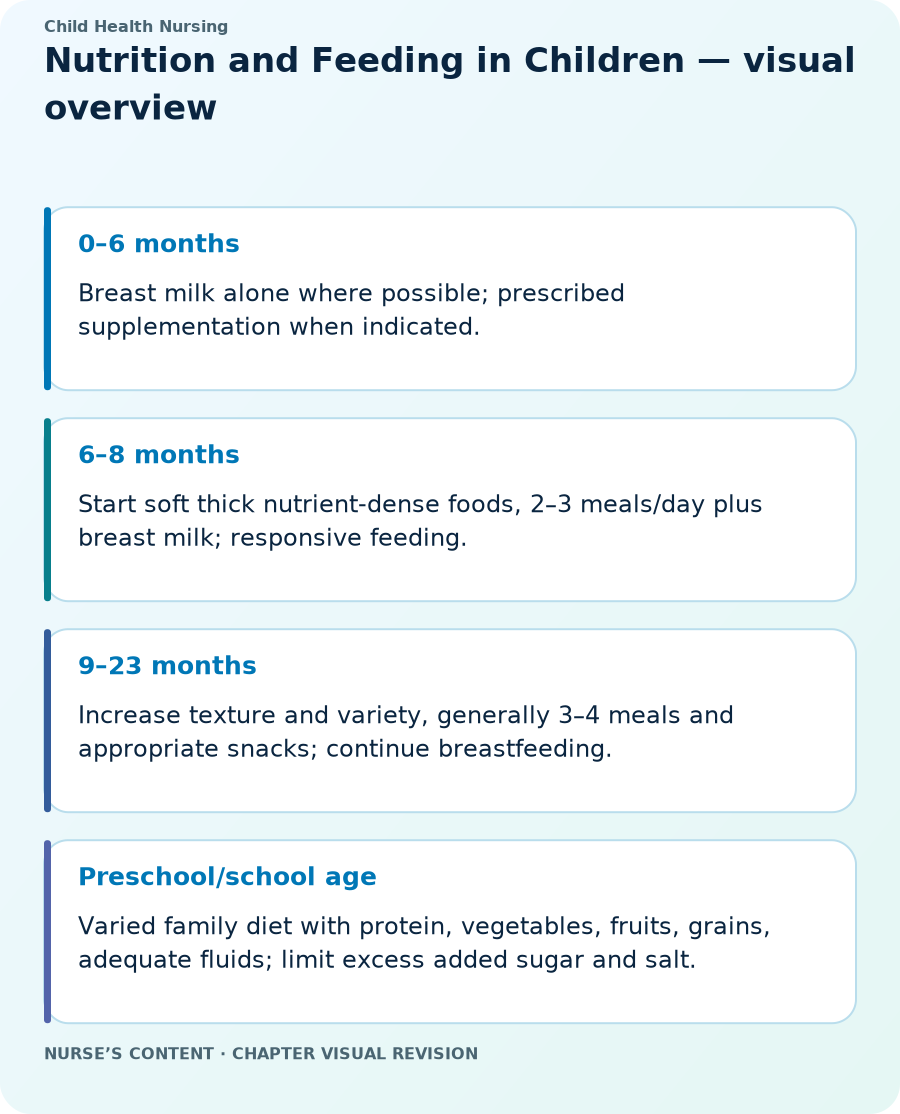
| 0–6 months | Breast milk alone where possible; prescribed supplementation when indicated. |
| 6–8 months | Start soft thick nutrient-dense foods, 2–3 meals/day plus breast milk; responsive feeding. |
| 9–23 months | Increase texture and variety, generally 3–4 meals and appropriate snacks; continue breastfeeding. |
| Preschool/school age | Varied family diet with protein, vegetables, fruits, grains, adequate fluids; limit excess added sugar and salt. |
| Adolescence | Increased growth needs, iron/calcium/protein adequacy, address body image and eating concerns. |
Use clean utensils, age-appropriate textures and supervision; avoid choking hazards (whole nuts, whole grapes), honey under one year and unsafe milk/water. Do not force feeding. Requirements vary by age, size, health and activity; use ICMR-NIN/clinical nutrition tables rather than one fixed amount.
4. Nutritional assessment
Dietary history, breastfeeding observation, weight/length/height, BMI-for-age, MUAC where indicated, oedema, physical signs and labs when needed. Wasting reflects low weight-for-height, stunting low height-for-age. Identify anaemia, vitamin deficiency, food insecurity and growth faltering. Refer severe acute malnutrition or poor intake with lethargy.
5. Important Examination Questions
Long Answer Questions
- 1. Explain breastfeeding, complementary feeding and nutritional assessment.
Short Answer Questions
- 1. List advantages of colostrum
- 2. describe attachment
- 3. explain feeding by age.
Very Short Answer Questions (with answers)
- 1. When start complementary foods? — Around 6 months.
- 2. What is exclusive breastfeeding? — Breast milk alone with limited medically indicated exceptions.
6. Quick Revision
- • Breastfeeding support must assess milk transfer.
- • Complementary food adds to milk.
- • Follow growth over time.
7. Conclusion
Breastfeeding support must assess milk transfer. Complementary food adds to milk. Follow growth over time.
Chapter reference images