Child Health Nursing
Introduction to Child Health Nursing
Definition, concepts, scope, principles and objectives of pediatric nursing, role and responsibilities of a pediatric nurse, rights of children and family-centered care.
Open quizzes and study tools Download PDF
CHAPTER 01 / CHILD HEALTH NURSING 01. Introduction to Child Health Nursing
1. Definition and scope
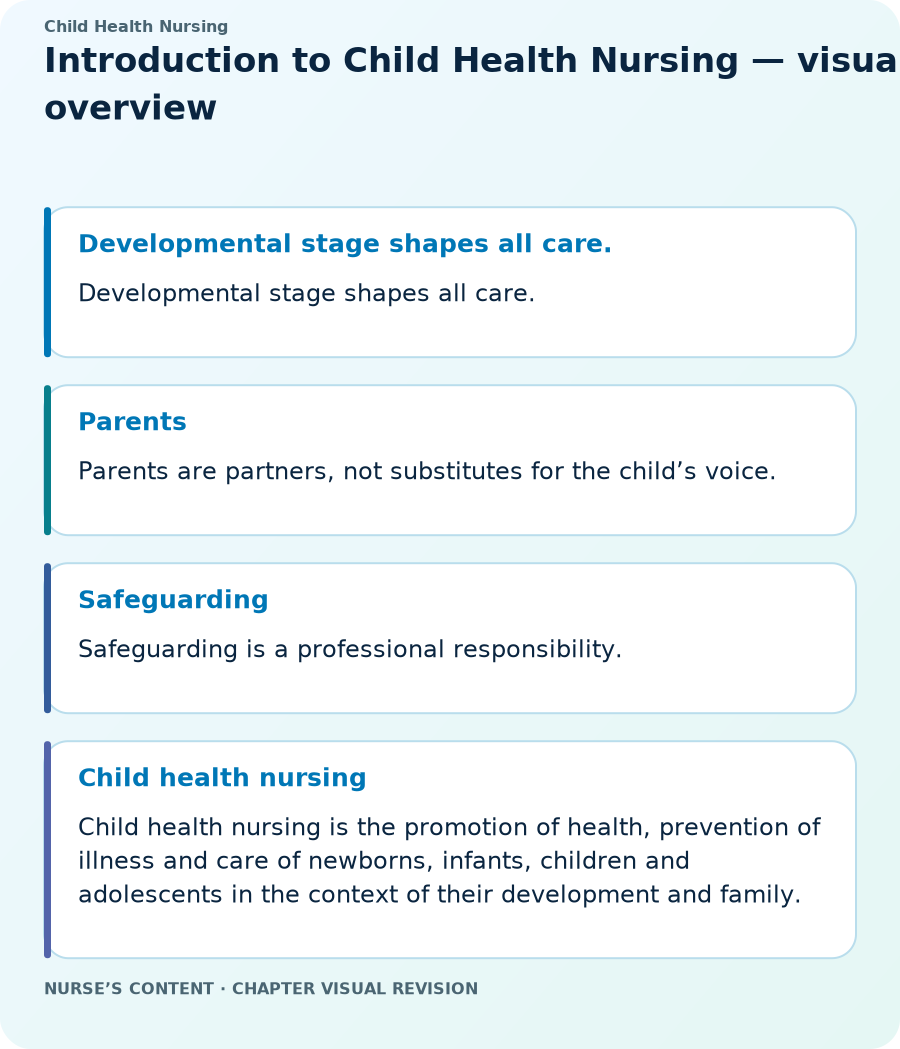
Child health nursing is the promotion of health, prevention of illness and care of newborns, infants, children and adolescents in the context of their development and family. It includes neonatal, acute and chronic care, community prevention, emergency care, disability support and palliation. Paediatric nursing is not simply adult care with smaller equipment: anatomy, physiology, communication, dependence and medication clearance change with age.
2. Principles and objectives
- • Promote survival, growth, development and safety; prevent disease through nutrition, immunization and health education.
- • Provide age-appropriate, atraumatic care that minimizes pain, fear and separation.
- • Use family-centred partnerships: respect family expertise, share information and involve caregivers according to child and family preferences.
- • Respect the child's evolving autonomy, assent, privacy and best interests, with legally appropriate consent and safeguarding.
- • Use weight-based measurements, age-specific reference ranges and suitable equipment.
3. Rights and responsibilities
The UN Convention on the Rights of the Child emphasizes survival/development, protection, participation and non-discrimination. Nurses assess needs, advocate for child safety, monitor treatment, educate caregivers, identify neglect/abuse, coordinate referrals and document objectively. In India, safeguarding and reporting obligations must follow applicable law and institutional child protection pathways. Do not promise absolute secrecy to a child who discloses imminent harm; explain appropriate safety disclosure.
4. Child-friendly clinical care
Use play and concrete explanations for young children, choices within safe limits, caregiver presence where appropriate, and privacy for adolescents. Explain procedures honestly without promising no pain. Use distraction and analgesia, prepare equipment before approaching child, and evaluate comfort and response.
5. Important Examination Questions
Long Answer Questions
- 1. Explain the scope and principles of child health nursing.
Short Answer Questions
- 1. Describe family-centred care
- 2. explain child rights and atraumatic care.
Very Short Answer Questions (with answers)
- 1. What is assent? — A child's affirmative agreement when developmentally able, alongside legally required consent.
- 2. Is a child a small adult clinically? — No.
6. Quick Revision
- • Developmental stage shapes all care.
- • Parents are partners, not substitutes for the child’s voice.
- • Safeguarding is a professional responsibility.
7. Conclusion
Developmental stage shapes all care. Parents are partners, not substitutes for the child’s voice. Safeguarding is a professional responsibility.
Chapter reference images