Biochemistry
Nutrition and Energy Metabolism
Balanced diet, energy requirements, basal metabolic rate, caloric value of nutrients, nutritional assessment, malnutrition and biochemical basis of nutritional disorders.
Open quizzes and study tools Download PDF
CHAPTER 19
Nutrition and Energy Metabolism
Balanced diet, energy needs, basal metabolic rate and nutritional disorders
1. Nutrition and balanced diet
Nutrition supplies energy, essential amino acids and fatty acids, vitamins, minerals, water and fibre. A balanced diet meets individual needs and supports growth, repair, immunity and normal body functions. A varied diet generally includes cereals or millets, pulses, vegetables, fruits, nuts/seeds, appropriate dairy or alternatives, and suitable protein sources. Requirements vary with age, activity, pregnancy, illness and recovery.
2. Energy values and energy balance
| Nutrient | Approximate metabolizable energy |
|---|---|
| Carbohydrate | 4 kcal/g |
| Protein | 4 kcal/g |
| Fat | 9 kcal/g |
| Alcohol | 7 kcal/g (not an essential nutrient) |
Example: 250 g carbohydrate, 60 g protein and 50 g fat provide approximately 1000 + 240 + 450 = 1690 kcal. Energy balance compares energy intake with expenditure. Persistent excess supports weight gain; persistent deficit may lead to weight loss and depletion of body stores. Body weight also changes with fluid balance.
3. Basal metabolic rate (BMR)
BMR is the minimum energy expenditure needed to maintain essential functions in a resting, awake, thermoneutral, postabsorptive state under standardized conditions. Resting energy expenditure (REE) is measured under somewhat less strict conditions. Factors include body size, lean mass, age, genetic and hormonal influences, fever, pregnancy, nutrition and illness. Total daily energy expenditure includes resting expenditure, physical activity and thermic effect of food. Indirect calorimetry estimates expenditure from oxygen consumption and CO₂ production; equations are estimates, not direct measurements.
4. Metabolic integration
In the fed state, insulin promotes storage of glucose, lipid and protein synthesis. During fasting, glucagon promotes hepatic glycogen breakdown and gluconeogenesis; lipolysis and ketogenesis increase as fasting continues. ATP from oxidative metabolism supports active transport, contraction, synthesis and signalling. The respiratory quotient (RQ) is CO₂ produced divided by O₂ consumed; approximately 1.0 for carbohydrate, 0.7 for fat and ~0.8 for mixed protein oxidation.
5. Nutritional assessment
- • Anthropometry: height, weight, BMI, weight change and appropriate circumference measurements.
- • Biochemical: selected laboratory results (e.g., iron status or vitamin levels) in context.
- • Clinical: muscle and fat stores, oedema, oral health, skin, wound healing and functional status.
- • Dietary: intake history, food access, appetite, restrictions and swallowing.
BMI = weight (kg) / height² (m²). Standard adult WHO categories: <18.5 underweight, 18.5–24.9 reference range, 25–29.9 overweight and ≥30 obesity. Asian/Indian clinical risk thresholds may be lower. BMI alone does not measure body composition or diagnose malnutrition. Albumin is not a standalone nutritional marker.
6. Malnutrition and biochemical basis
| Condition | Features / biochemical relevance |
|---|---|
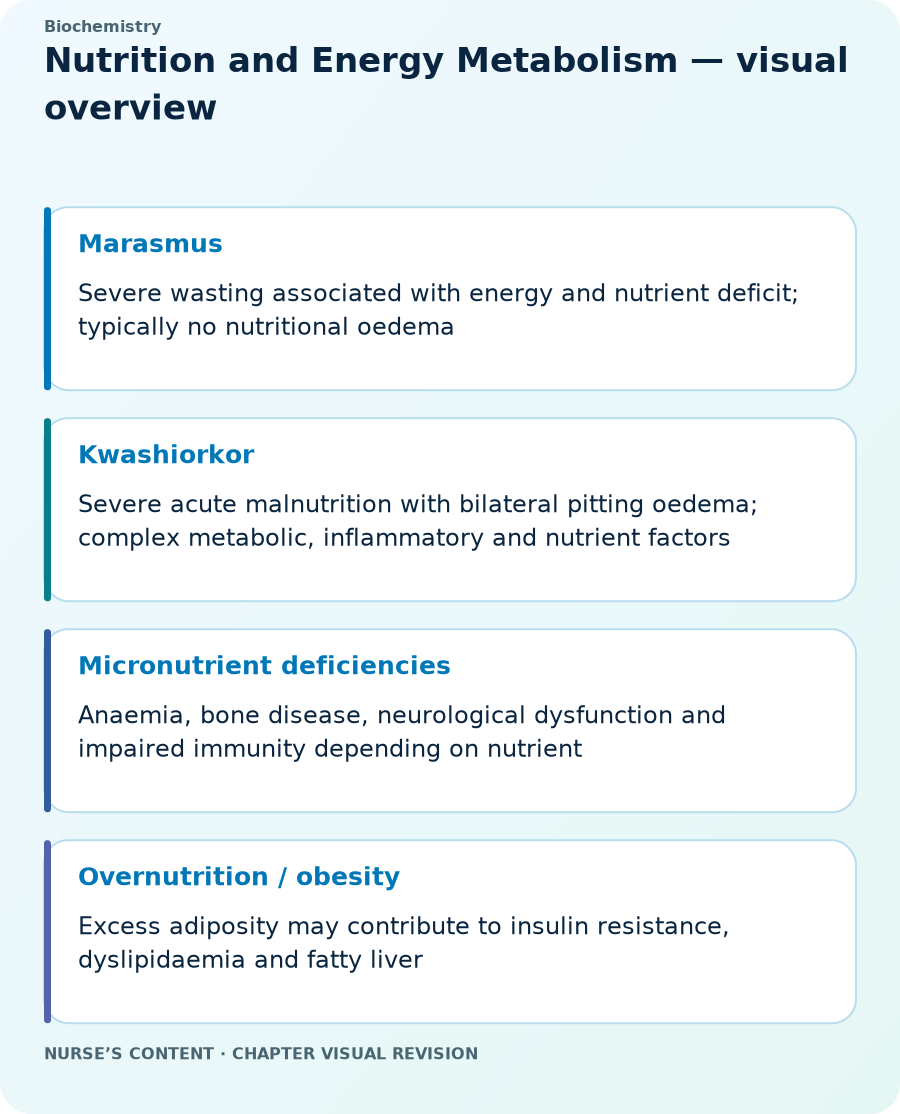
| Marasmus | Severe wasting associated with energy and nutrient deficit; typically no nutritional oedema |
| Kwashiorkor | Severe acute malnutrition with bilateral pitting oedema; complex metabolic, inflammatory and nutrient factors |
| Micronutrient deficiencies | Anaemia, bone disease, neurological dysfunction and impaired immunity depending on nutrient |
| Overnutrition / obesity | Excess adiposity may contribute to insulin resistance, dyslipidaemia and fatty liver |
| Refeeding syndrome | After nutrition reintroduction in susceptible undernourished patients, shifts in phosphate, potassium and magnesium may cause serious complications |
Protein requirements depend on health status; ICMR-NIN 2020 reference protein intakes for healthy 65-kg men and 55-kg women are 54 and 46 g/day respectively [1]. Clinical requirements may differ substantially. Refeeding risk requires a supervised nutrition plan, monitoring and appropriate vitamin/electrolyte management.
7. Macronutrients, micronutrients and energy balance
| Nutrient | Energy value and major purpose |
|---|---|
| Carbohydrate | 4 kcal/g; readily available fuel and glucose supply |
| Protein | 4 kcal/g; structural and functional molecules, repair and enzyme synthesis |
| Fat | 9 kcal/g; concentrated energy, membranes and essential fatty acids |
| Vitamins and minerals | No direct caloric contribution; metabolic and regulatory functions |
| Water and fibre | Support hydration and bowel function; some fermentable fibre yields energy indirectly |
Worked energy example
A meal with 60 g digestible carbohydrate, 20 g protein and 15 g fat provides approximately (60 × 4) + (20 × 4) + (15 × 9) = 455 kcal, excluding other energy sources. Food labels and dietary analyses may account for additional constituents and rounding.
8. Basal metabolism and total energy expenditure
BMR is minimum energy expenditure under standardized resting, fasting and thermoneutral conditions. Resting energy expenditure is measured under less strict conditions. Total daily energy expenditure also includes physical activity and the thermic effect of food. Fever, body composition, thyroid status, growth and illness may alter requirements. Energy equations are estimates, and clinical nutrition planning may require indirect calorimetry or specialist assessment.
9. Nutritional assessment and nursing care
ABCD assessment summarizes anthropometric, biochemical, clinical and dietary information. Unintentional weight loss, reduced intake, muscle wasting and impaired function may signal malnutrition even at higher BMI. Oedema can obscure weight loss. Assess food access, chewing and swallowing ability, prescribed restrictions and feeding assistance needs; communicate concerns to the clinical nutrition team.
10. Nursing applications
Screen for nutritional risk using approved tools; monitor intake, weight trends, hydration and swallowing. Coordinate dietitian referrals and prescribed feeding. Recognize refeeding risk and report electrolyte shifts or deterioration. Provide culturally appropriate, affordable dietary education without assigning universal calorie or protein targets.
11. Important Examination Questions
Long Answer Questions
- 1. Explain balanced diet, energy metabolism and nutritional assessment.
- 2. Explain basal metabolic rate, energy requirements and nutritional assessment.
- 3. Compare marasmus and kwashiorkor and discuss the biochemical basis of malnutrition.
Short Answer Questions
- 1. Write a short note on BMR.
- 2. Write a short note on energy values.
- 3. Write a short note on marasmus and kwashiorkor.
- 4. Write a short note on refeeding syndrome.
Very Short Answer Questions
- 1. What is BMI? – Body mass index: weight in kg divided by height squared in metres.
- 2. What does a respiratory quotient of about 1 suggest? – Predominant carbohydrate oxidation under appropriate steady-state conditions.
- 3. What is a characteristic finding of kwashiorkor? – Bilateral nutritional pitting oedema.
- 4. Which electrolyte is particularly important in refeeding risk? – Phosphate (also monitor potassium and magnesium).
Additional objective question
Energy supplied by 1 g of fat? – Approximately 9 kcal.
12. Quick Revision
- • Carbohydrate and protein provide approximately 4 kcal/g; fat provides 9 kcal/g.
- • BMR is measured under standardized basal conditions.
- • Malnutrition includes undernutrition, micronutrient imbalance and overnutrition.
- • Refeeding syndrome can involve severe phosphate, potassium and magnesium abnormalities.
Conclusion
Nutritional biochemistry explains energy utilization, growth, tissue repair and malnutrition; nursing assessment connects these principles to individualized care.
Chapter reference images