Biochemistry
Metabolism of Proteins
Amino acid metabolism, transamination, deamination, urea cycle, protein synthesis, nitrogen balance and clinical importance.
Open quizzes and study tools Download PDF
CHAPTER 09
Metabolism of Proteins
Amino acid reactions, urea cycle, synthesis and nitrogen balance
1. Introduction
Dietary proteins and tissue protein turnover supply the amino acid pool. Amino acids support synthesis of proteins, neurotransmitters, haem, creatine and other nitrogenous compounds. Excess amino acids are not stored as such; their nitrogen and carbon components are handled separately.
2. Transamination
Transfer of an amino group from an amino acid to an α-keto acid, usually α-ketoglutarate, yielding glutamate and another α-keto acid. Aminotransferases use pyridoxal phosphate (vitamin B6).
ALT: alanine + α-ketoglutarate ⇌ pyruvate + glutamate.
AST: aspartate + α-ketoglutarate ⇌ oxaloacetate + glutamate.
Transamination redistributes nitrogen without releasing free ammonia directly.
3. Deamination and ammonia transport
Oxidative deamination of glutamate by glutamate dehydrogenase releases ammonium and α-ketoglutarate, mainly in mitochondria. Ammonia is neurotoxic at elevated concentrations. Glutamine synthetase incorporates ammonia into glutamine in many tissues; glutamine transports nitrogen to liver and kidney. The glucose–alanine cycle transfers amino nitrogen from muscle to liver while the carbon skeleton supports glucose synthesis.
4. Urea cycle (ornithine cycle)
Occurs in liver, with the first two steps in mitochondria and the remainder in cytosol. Converts toxic nitrogen into urea for renal excretion.
| Step | Enzyme and product |
|---|---|
| 1 | Carbamoyl phosphate synthetase I (CPS I): ammonia + bicarbonate + 2 ATP → carbamoyl phosphate; activated by N-acetylglutamate |
| 2 | Ornithine transcarbamylase: carbamoyl phosphate + ornithine → citrulline |
| 3 | Argininosuccinate synthetase: citrulline + aspartate + ATP → argininosuccinate |
| 4 | Argininosuccinate lyase: argininosuccinate → arginine + fumarate |
| 5 | Arginase: arginine + water → urea + ornithine |
The two nitrogen atoms come from ammonia and aspartate. Three ATP molecules are used, equivalent to four high-energy phosphate bonds. Fumarate connects the cycle with TCA metabolism. Urea is formed in liver, transported in blood and excreted mainly by kidneys.
5. Fate of carbon skeletons
Glucogenic amino acids produce pyruvate or TCA intermediates for glucose synthesis. Ketogenic amino acids yield acetyl-CoA or acetoacetate; leucine and lysine are exclusively ketogenic. Breakdown may supply energy during fasting or illness.
6. Protein synthesis and turnover
DNA is transcribed to mRNA; ribosomes translate the codon sequence using aminoacyl-tRNA. Newly synthesized proteins fold, undergo modifications and are targeted to their functions. Ubiquitin–proteasome and lysosomal pathways degrade proteins for recycling. Insulin, amino acids and growth signals promote synthesis; severe illness and stress can increase breakdown.
7. Nitrogen balance
Nitrogen balance = nitrogen intake − nitrogen losses (urine, stool, skin and other routes). Approximate intake: protein grams ÷ 6.25, assuming 16% nitrogen content.
| State | Example |
|---|---|
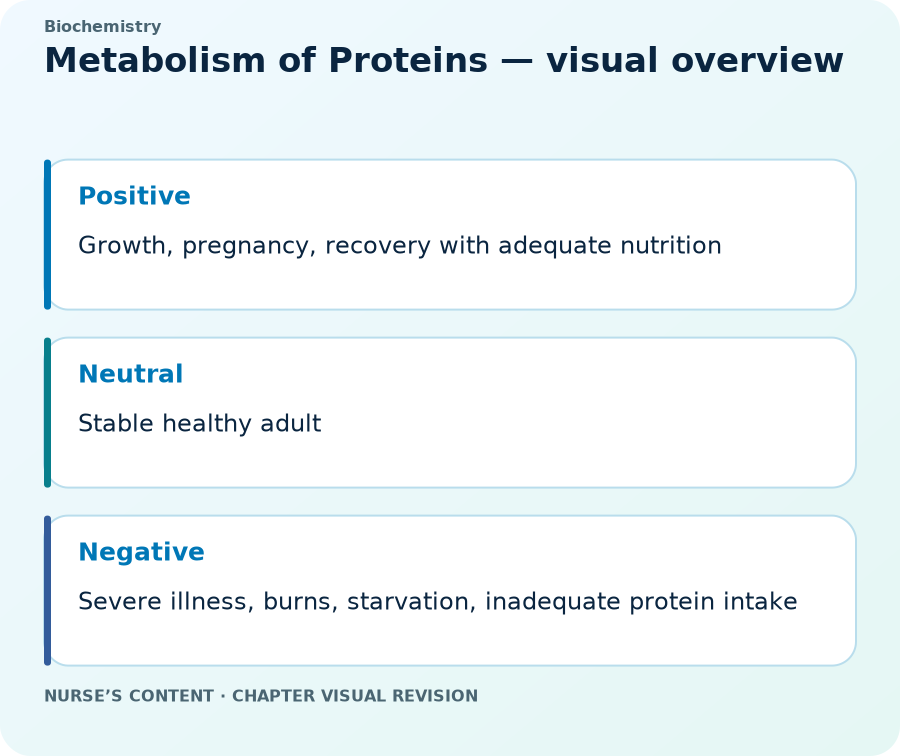
| Positive | Growth, pregnancy, recovery with adequate nutrition |
| Neutral | Stable healthy adult |
| Negative | Severe illness, burns, starvation, inadequate protein intake |
A full balance assessment requires clinical and dietary expertise; urinary urea nitrogen alone is not total nitrogen loss.
8. Amino acids as precursors
| Amino acid | Derived substance |
|---|---|
| Tyrosine | Catecholamines, thyroid hormones, melanin |
| Tryptophan | Serotonin and melatonin; contribution to niacin synthesis |
| Glutamate | GABA and glutathione components |
| Glycine | Haem, purines and glutathione components |
| Arginine | Nitric oxide and urea cycle intermediates |
9. Clinical significance and nursing applications
Urea cycle defects or severe liver dysfunction can cause hyperammonaemia and encephalopathy. Renal dysfunction may increase blood urea. Phenylketonuria results from impaired phenylalanine metabolism (Chapter 20). Monitor mental status, dietary intake, weight, renal and liver tests; promptly report unexplained confusion or severe vomiting. Protein restriction is not routine in liver disease and must follow specialist plans.
10. Important Examination Questions
Long Answer Questions
- 1. Describe the urea cycle and amino acid metabolism.
- 2. Explain transamination, deamination and ammonia transport.
- 3. Describe protein synthesis and nitrogen balance with clinical examples.
Short Answer Questions
- 1. Write a short note on Transamination versus deamination.
- 2. Write a short note on nitrogen balance.
- 3. Write a short note on alanine cycle.
Very Short Answer Questions
- 1. Which vitamin is needed for transamination? – Vitamin B6 (PLP).
- 2. Which enzyme releases urea from arginine? – Arginase.
- 3. Name two amino acids that transport nitrogen between tissues. – Glutamine and alanine.
- 4. What is positive nitrogen balance? – Nitrogen intake exceeds nitrogen loss.
Additional objective question
Site of urea formation? – Liver.
11. Quick Revision
- • Transamination transfers amino groups, commonly using PLP.
- • Oxidative deamination releases ammonia from glutamate.
- • Urea is synthesized in liver and largely excreted by kidneys.
- • Negative nitrogen balance is associated with net protein loss.
Conclusion
Amino acid metabolism links protein turnover, nitrogen disposal and energy metabolism; liver and kidney function are central to safe nitrogen handling.
Chapter reference images