Biochemistry
Liver Function and Biochemistry
Functions of the liver, bilirubin metabolism, bile pigments, detoxification, protein synthesis, carbohydrate and lipid metabolism and liver function tests.
Open quizzes and study tools Download PDF
CHAPTER 16
Liver Function and Biochemistry
Metabolic functions, bilirubin, bile pigments, detoxification and liver tests
1. Biochemical functions of the liver
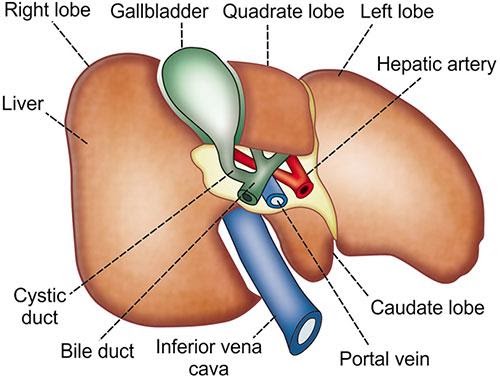
The liver is a major metabolic organ receiving blood from the portal vein and hepatic artery. Hepatocytes process nutrients, synthesize proteins, produce bile, metabolize drugs and help maintain blood glucose and lipid homeostasis.
| Function | Biochemical role |
|---|---|
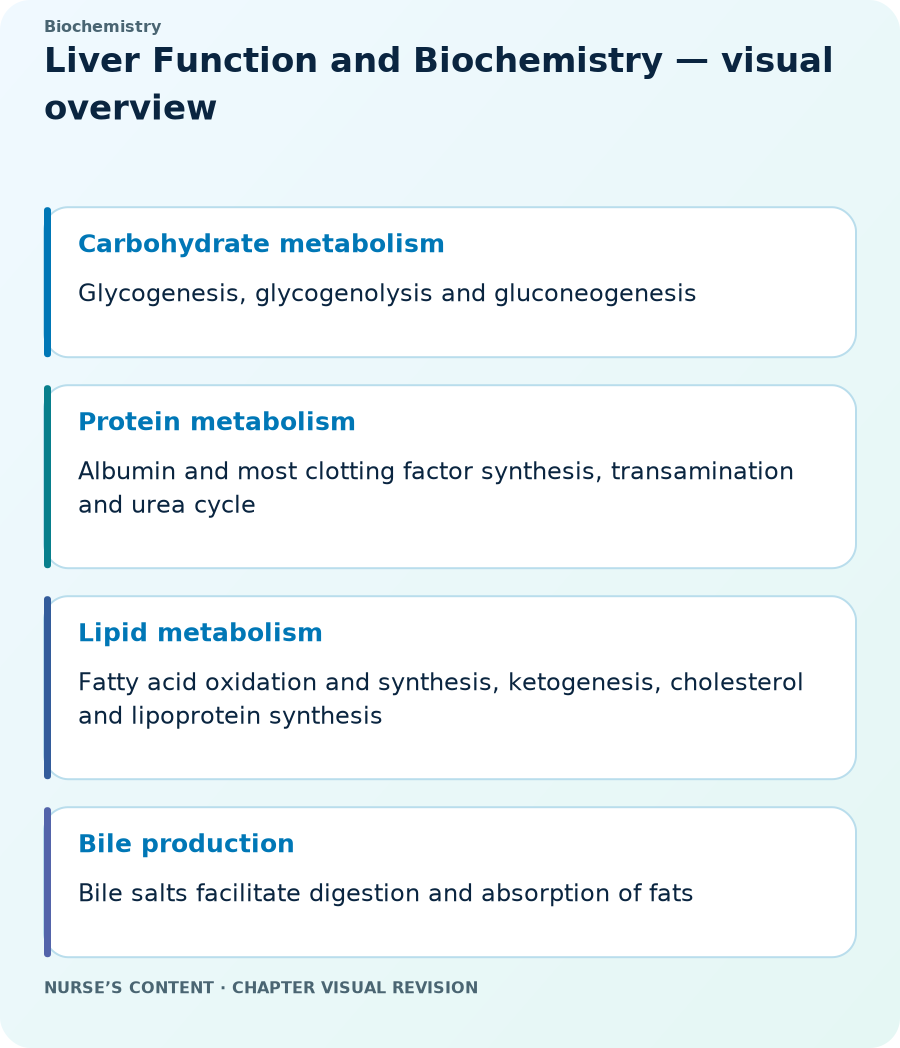
| Carbohydrate metabolism | Glycogenesis, glycogenolysis and gluconeogenesis |
| Protein metabolism | Albumin and most clotting factor synthesis, transamination and urea cycle |
| Lipid metabolism | Fatty acid oxidation and synthesis, ketogenesis, cholesterol and lipoprotein synthesis |
| Bile production | Bile salts facilitate digestion and absorption of fats |
| Storage | Glycogen, iron, vitamin A and vitamin B12, among other nutrients |
| Detoxification | Biotransformation and excretion of endogenous and foreign compounds |
2. Bilirubin and bile pigment metabolism
- 1. Macrophages degrade haem from ageing red cells; haem oxygenase forms biliverdin, iron and carbon monoxide.
- 2. Biliverdin reductase forms unconjugated bilirubin, which is poorly water-soluble and transported bound to albumin.
- 3. Hepatocytes take up bilirubin; UGT1A1 conjugates it with glucuronic acid to increase water solubility.
- 4. Conjugated bilirubin is secreted into bile and enters the intestine.
- 5. Gut bacteria form urobilinogen. Most is converted to stool pigments such as stercobilin; some is reabsorbed and a small amount excreted in urine as urobilin.
3. Types of jaundice
| Pattern | Main mechanism | Typical findings |
|---|---|---|
| Prehepatic (haemolytic) | Excess bilirubin production | Predominantly unconjugated bilirubin; urine bilirubin usually absent |
| Hepatocellular | Impaired uptake, conjugation or secretion | Mixed bilirubin elevation possible; ALT/AST often elevated |
| Cholestatic / obstructive | Reduced bile flow | Conjugated bilirubin and ALP/GGT often elevated; dark urine, pale stools possible |
Jaundice is a sign, not a diagnosis. Neonatal jaundice has age-specific assessment and treatment thresholds. Unconjugated bilirubin can be neurotoxic in newborns at sufficiently high concentrations.
4. Detoxification and drug metabolism
Phase I reactions include oxidation, reduction and hydrolysis; cytochrome P450 enzymes are important. Phase II conjugation reactions include glucuronidation, sulfation and glutathione conjugation. Transporters help excrete metabolites into bile or blood. Biotransformation may also activate prodrugs or generate toxic metabolites. Glutathione helps detoxify reactive compounds; paracetamol overdose may overwhelm protective pathways and requires urgent treatment.
5. Liver function tests (LFTs)
| Test | Illustrative adult range | Interpretation |
|---|---|---|
| ALT | ~7–56 U/L | Hepatocellular injury; relatively liver-enriched |
| AST | ~10–40 U/L | Liver or muscle injury |
| ALP | ~40–130 U/L | Cholestasis or increased bone activity |
| GGT | Lab/sex-specific | Supports hepatobiliary origin of raised ALP |
| Total bilirubin | 0.2–1.2 mg/dL | Production, conjugation or excretion abnormality |
| Albumin | 3.5–5.0 g/dL | Synthetic function and other systemic factors |
| PT / INR | INR ~0.8–1.2 off anticoagulants | Clotting factor synthesis, vitamin K status and anticoagulant effects |
ALT and AST primarily reflect injury rather than liver function. Albumin and PT/INR can help assess synthesis but are affected by other factors. A normal enzyme level does not exclude chronic liver disease. Interpret patterns and trends using local laboratory ranges.
6. Liver enzyme patterns and synthetic function
| Pattern | Typical findings |
|---|---|
| Hepatocellular injury | ALT and AST rise disproportionately to ALP |
| Cholestatic injury | ALP rises disproportionately; GGT can support hepatic origin |
| Impaired synthetic function | Prolonged PT/INR and/or reduced albumin, with other causes considered |
| Altered bilirubin handling | Raised total bilirubin; direct and indirect fractions aid assessment |
The magnitude of a transaminase elevation does not necessarily measure remaining liver functional capacity. INR may also be influenced by anticoagulants and vitamin K deficiency.
7. Nursing applications
Assess jaundice, pruritus, abdominal symptoms, bleeding, nutrition and mental status. Record medication and alcohol history respectfully; observe for confusion or reduced consciousness. Obtain specimens correctly, report critical results and support prescribed care. Suspected acute liver failure with encephalopathy or coagulopathy requires urgent escalation.
8. Important Examination Questions
Long Answer Questions
- 1. Discuss liver biochemical functions, bilirubin metabolism and LFTs.
- 2. Explain bilirubin metabolism and the biochemical basis of jaundice.
- 3. Describe liver function tests and distinguish hepatocellular and cholestatic injury.
Short Answer Questions
- 1. Write a short note on Types of jaundice.
- 2. Write a short note on phase I/II reactions.
- 3. Write a short note on ALT versus ALP.
Very Short Answer Questions
- 1. Which enzyme conjugates bilirubin? – UGT1A1.
- 2. Which bile pigment is formed first from haem breakdown? – Biliverdin.
- 3. Which liver protein supports plasma oncotic pressure? – Albumin.
- 4. Which test reflects coagulation factor function and can indicate impaired hepatic synthesis? – PT/INR, interpreted in context.
Additional objective question
Which enzyme conjugates bilirubin? – UGT1A1.
9. Quick Revision
- • The liver synthesizes most plasma proteins and urea.
- • Unconjugated bilirubin travels bound to albumin; conjugated bilirubin is water soluble.
- • ALT and AST mark injury rather than directly measuring synthetic function.
- • ALP and GGT help identify cholestatic patterns.
Conclusion
Liver biochemistry explains nutrient metabolism, detoxification, bilirubin excretion and laboratory patterns of hepatic injury and dysfunction.
Chapter reference images