Biochemistry
Biochemical Disorders and Clinical Applications
Diabetes mellitus, dyslipidemia, gout, phenylketonuria, glycogen storage disorders, vitamin deficiency disorders and other common metabolic disorders.
Open quizzes and study tools Download PDF
CHAPTER 20
Biochemical Disorders and Clinical Applications
Diabetes, dyslipidaemia, gout, inherited metabolic disorders and deficiencies
1. Diabetes mellitus
Diabetes is a group of disorders characterized by hyperglycaemia due to impaired insulin secretion, action or both. Type 1 usually results from autoimmune β-cell destruction; type 2 involves insulin resistance and progressive β-cell dysfunction. Gestational diabetes is diagnosed during pregnancy using pregnancy-specific criteria. Other forms include monogenic, pancreatic and drug-associated diabetes. See Chapter 18 for diagnostic thresholds.
Insulin deficiency or resistance increases hepatic glucose output and reduces effective glucose utilization, causing hyperglycaemia. When renal reabsorptive capacity is exceeded, glycosuria and osmotic diuresis can cause polyuria, thirst and dehydration. Chronic hyperglycaemia, oxidative stress and vascular injury contribute to retinopathy, nephropathy, neuropathy and cardiovascular disease.
| Acute complication | Biochemical basis and alert features |
|---|---|
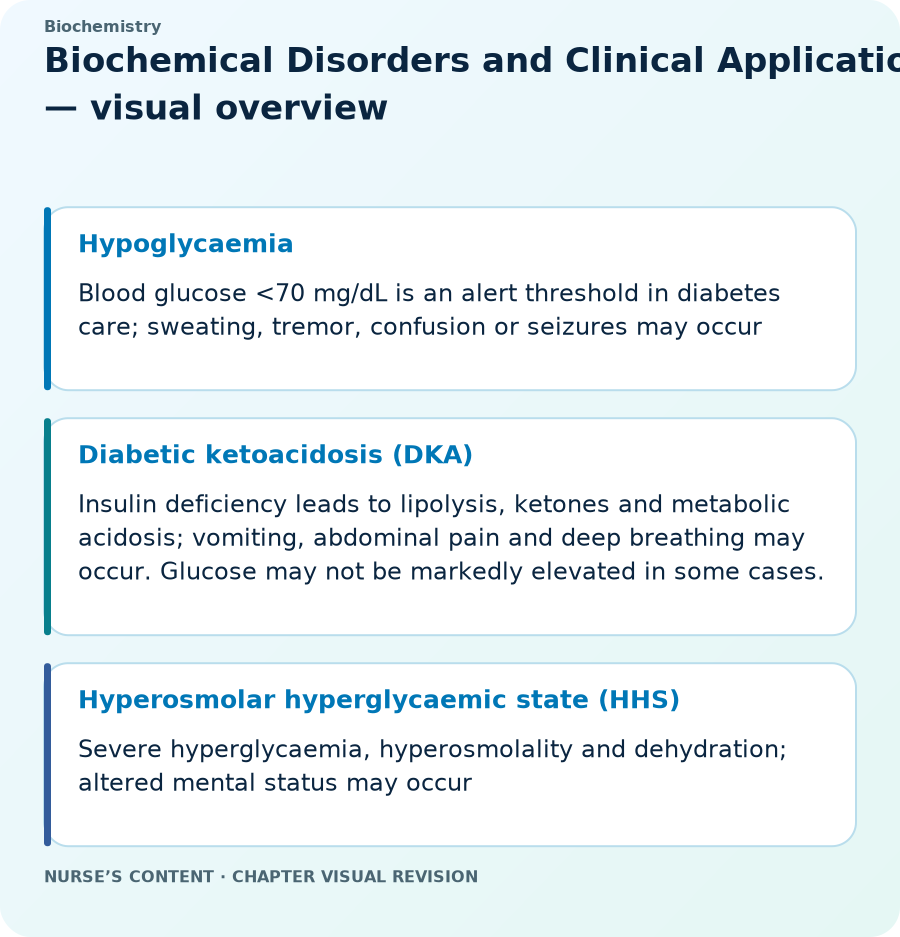
| Hypoglycaemia | Blood glucose <70 mg/dL is an alert threshold in diabetes care; sweating, tremor, confusion or seizures may occur |
| Diabetic ketoacidosis (DKA) | Insulin deficiency leads to lipolysis, ketones and metabolic acidosis; vomiting, abdominal pain and deep breathing may occur. Glucose may not be markedly elevated in some cases. |
| Hyperosmolar hyperglycaemic state (HHS) | Severe hyperglycaemia, hyperosmolality and dehydration; altered mental status may occur |
These are clinical emergencies when severe or suspected. Assess, check glucose and escalate according to protocol. Never give oral food or fluid to a patient unable to swallow safely. Lifelong management includes individualized nutrition, medication, monitoring, education and prevention of complications.
2. Dyslipidaemia
Abnormal concentrations of lipoproteins or lipids. Elevated LDL-C, triglyceride-rich remnants and apoB-containing particles contribute to atherosclerosis; severe hypertriglyceridaemia can cause pancreatitis. Familial hypercholesterolaemia often involves impaired LDL receptor pathways. Treatment is risk-based and may include lipid-lowering medication with dietary and lifestyle support. Monitor lipid profile, adherence and clinically important adverse effects.
3. Gout and purine metabolism
Purines are degraded through hypoxanthine and xanthine to uric acid by xanthine oxidoreductase. Hyperuricaemia may arise from reduced excretion or increased production. Monosodium urate crystal deposition in joints causes gout; stones and tophi may occur. Serum urate can be normal during an acute flare and elevated urate alone is not diagnostic. Allopurinol inhibits xanthine oxidase. Acute red, swollen joints require evaluation, including exclusion of infection where indicated.
4. Inherited metabolic disorders
| Disorder | Biochemical defect | Clinical significance |
|---|---|---|
| Phenylketonuria (PKU) | Usually phenylalanine hydroxylase deficiency; phenylalanine accumulates | Untreated elevation can impair neurodevelopment; newborn screening and specialist diet/treatment |
| Classic galactosaemia | GALT deficiency; galactose-1-phosphate accumulates | Newborn feeding-related illness, jaundice, liver dysfunction and sepsis risk; urgent specialist management |
| Maple syrup urine disease | Branched-chain α-ketoacid dehydrogenase deficiency | Accumulation of leucine and related metabolites; encephalopathy, metabolic crises |
| Hereditary fructose intolerance | Aldolase B deficiency | Hypoglycaemia and hepatic dysfunction after fructose exposure |
| G6PD deficiency | Reduced NADPH production in red cells | Oxidant-triggered haemolysis; avoid verified triggers and promptly assess symptoms |
5. Glycogen storage disorders
| Type | Defect / important features |
|---|---|
| I (Von Gierke) | Glucose-6-phosphatase system; fasting hypoglycaemia, hepatomegaly, lactate elevation |
| II (Pompe) | Lysosomal acid α-glucosidase; muscle weakness, possible infantile cardiomyopathy |
| III (Cori/Forbes) | Debranching enzyme; liver and muscle manifestations |
| V (McArdle) | Muscle glycogen phosphorylase; exercise intolerance and possible rhabdomyolysis |
6. Other nutritional and metabolic conditions
| Condition | Biochemical basis / signs |
|---|---|
| Iron deficiency | Insufficient available iron for haem synthesis; microcytic anaemia commonly |
| B12 / folate deficiency | Impaired DNA synthesis; megaloblastic changes; B12 can cause neurological symptoms |
| Vitamin D deficiency | Impaired calcium/phosphate mineralization; rickets/osteomalacia |
| Scurvy | Vitamin C deficiency impairs collagen function; bleeding and poor healing |
| Wilson disease | ATP7B-related copper handling defect; hepatic and neurological manifestations |
| Haemochromatosis | Excess iron accumulation; organ damage over time |
| Lactic acidosis | Lactate accumulation due to increased production or reduced clearance; evaluate underlying cause |
7. Biochemical changes in diabetes: comparison
| Feature | Type 1 diabetes | Type 2 diabetes |
|---|---|---|
| Main mechanism | Usually autoimmune beta-cell destruction | Insulin resistance and progressive beta-cell dysfunction |
| Insulin availability | Marked deficiency | Variable; may decline over time |
| Ketosis | Greater susceptibility when insulin is deficient | Can occur, particularly with severe illness or relative deficiency |
| Clinical care | Requires insulin replacement | Individualized lifestyle and medication plan; insulin may be needed |
Neither age nor body size alone establishes diabetes type. Laboratory and clinical assessment guide classification.
8. Pathways affected in inherited metabolic disorders
Phenylketonuria
Phenylalanine hydroxylase normally converts phenylalanine to tyrosine using tetrahydrobiopterin (BH4). Deficient activity causes phenylalanine accumulation, which can harm neurodevelopment. Newborn screening and early specialist management reduce risk. Dietary phenylalanine restriction requires professional supervision because phenylalanine is also an essential amino acid.
Glycogen storage disease
Defects in glycogen synthesis, degradation or lysosomal handling cause distinct clinical patterns. Liver-predominant disorders may cause fasting hypoglycaemia; muscle-predominant disorders may cause exercise intolerance. Pompe disease is a lysosomal storage disorder involving acid alpha-glucosidase deficiency. Treatment is disease-specific.
Gout
Uric acid is produced from purine breakdown and is eliminated principally through renal and intestinal routes. Crystal deposition causes inflammation. Hyperuricaemia alone is insufficient to diagnose gout; acute monoarthritis also requires consideration of septic arthritis. Long-term treatment decisions are clinical, not determined by a single urate reading.
9. Nursing responsibilities
Recognize metabolic warning signs (altered consciousness, dehydration, seizures, respiratory changes, vomiting). Follow authorized emergency protocols, collect specimens safely and monitor trends. Support specialist dietary requirements for inherited disorders, respect genetic confidentiality and teach patients when and how to seek urgent care. Ensure families understand follow-up and avoid unprescribed supplements or dietary restrictions.
10. Additional biochemical disorders
| Condition | Underlying disturbance / relevance |
|---|---|
| Lactose intolerance | Low lactase activity; undigested lactose causes osmotic symptoms and bacterial fermentation. |
| Familial hypercholesterolaemia | Inherited disruption of LDL clearance, often involving LDLR; early atherosclerotic risk. |
| Urea cycle disorder | Defects in nitrogen disposal may cause hyperammonaemia; acute neurologic changes require urgent specialist care. |
| Medium-chain acyl-CoA dehydrogenase deficiency | Impaired fatty acid oxidation; fasting or illness may trigger hypoketotic hypoglycaemia. |
| Condition | Underlying disturbance / relevance |
|---|---|
| Lesch–Nyhan syndrome | HGPRT deficiency disrupts purine salvage, causing excess uric acid and neurological manifestations. |
11. Clinical case review
Case 1: A patient with diabetes develops vomiting, deep rapid breathing and dehydration. Hyperglycaemia and metabolic acidosis with raised ketones support suspected DKA. The immediate nursing priority is clinical assessment, urgent escalation and monitoring according to the emergency protocol.
Case 2: A patient presents with pallor, fatigue and low haemoglobin with microcytosis. Iron deficiency is one possibility, but thalassaemia and inflammation also require consideration. Review iron studies and clinical history rather than assuming all microcytic anaemia is due to iron deficiency.
Case 3: A newborn becomes lethargic with vomiting and feeding difficulty. Inherited metabolic disease is one possible cause among serious alternatives such as sepsis. Immediate clinical assessment is essential; newborn screening results are not a substitute for urgent evaluation.
12. Important Examination Questions
Long Answer Questions
- 1. Discuss biochemical changes in diabetes and common metabolic disorders.
- 2. Explain the biochemical basis of diabetes, DKA and HHS.
- 3. Describe phenylketonuria, gout and selected inherited metabolic disorders.
Short Answer Questions
- 1. Write a short note on DKA.
- 2. Write a short note on gout.
- 3. Write a short note on PKU.
- 4. Write a short note on glycogen storage disease.
- 5. Write a short note on dyslipidaemia.
Very Short Answer Questions
- 1. What enzyme is deficient in classic galactosaemia? – Galactose-1-phosphate uridylyltransferase (GALT).
- 2. Which glycogen storage disorder involves muscle glycogen phosphorylase deficiency? – McArdle disease (type V).
- 3. What biochemical defect causes G6PD-related vulnerability? – Impaired NADPH generation and reduced antioxidant defence in red cells.
- 4. What are the three classic symptoms of hyperglycaemia? – Polyuria, polydipsia and unexplained weight loss are classic features; polyphagia may also occur.
Additional objective question
Which enzyme is commonly deficient in PKU? – Phenylalanine hydroxylase.
13. Quick Revision
- • Insulin deficiency or resistance produces abnormal glucose regulation.
- • DKA involves excess ketones and metabolic acidosis; HHS involves marked hyperosmolality and dehydration.
- • PKU commonly results from phenylalanine hydroxylase deficiency.
- • Gout is associated with monosodium urate crystal deposition.
Conclusion
Biochemical disorders illustrate how disrupted enzymes, transport pathways and hormonal regulation produce recognizable clinical patterns that guide safe assessment and referral.
Chapter reference images