Anatomy & Physiology
Digestive Physiology
Digestion and absorption of carbohydrates, proteins and fats, functions of digestive enzymes, gastrointestinal movements and liver and pancreatic functions.
Open quizzes and study tools Download PDF
Functions and regulation of digestion
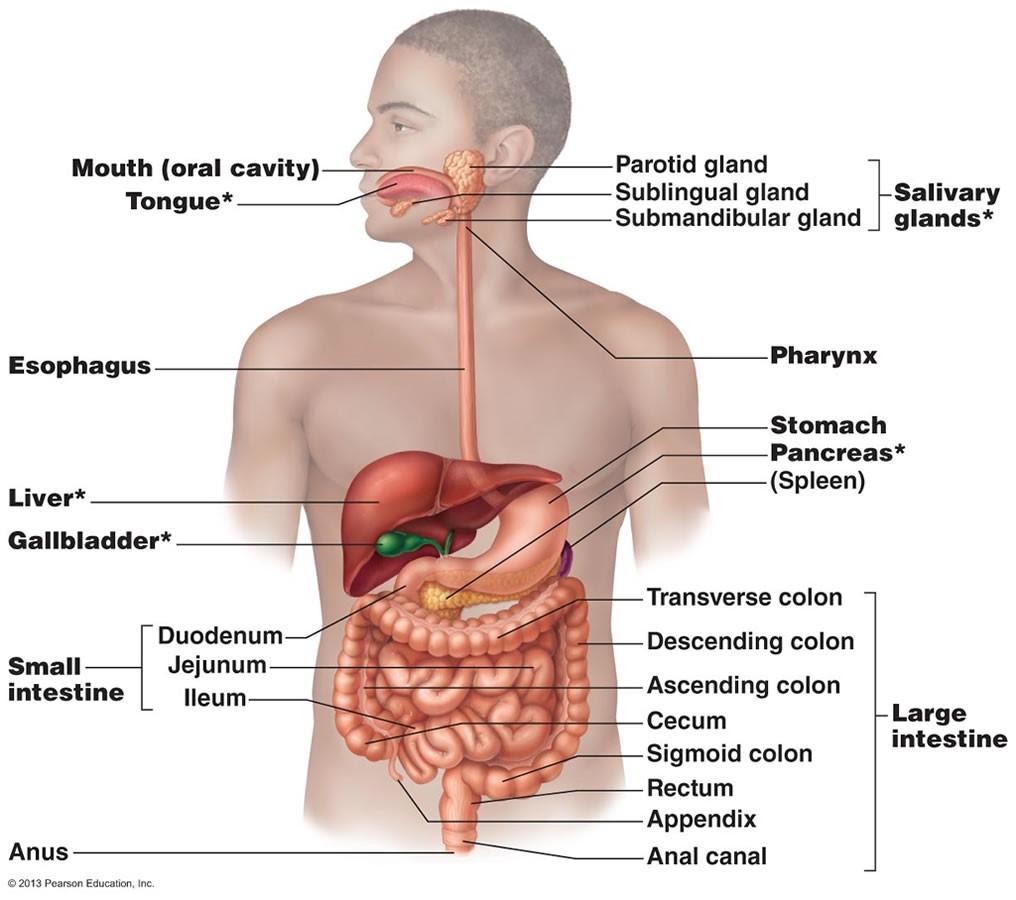
Digestion transforms food into absorbable molecules. The digestive system performs ingestion, propulsion, mechanical breakdown, chemical digestion, absorption and defecation. Mechanical processing changes particle size and mixes contents; chemical processing hydrolyses large molecules using enzymes. Absorption transfers nutrients, water and electrolytes from the lumen across the epithelium. Most nutrient absorption occurs in the small intestine.
Enteric neural networks coordinate local motility and secretion, while autonomic input and circulating hormones modify activity. Parasympathetic activity generally supports digestive processes, although effects depend on the organ and receptor. Gastrin promotes gastric secretory activity. Secretin, released in response to acid entering the duodenum, promotes bicarbonate-rich pancreatic secretion. Cholecystokinin responds especially to fats and proteins, supporting pancreatic enzyme secretion and gallbladder contraction.
Movement, saliva and swallowing
Mastication breaks food into smaller pieces and mixes it with saliva. Saliva moistens the bolus, dissolves substances for taste, supports oral protection and introduces salivary amylase. Swallowing begins voluntarily, then coordinated pharyngeal and oesophageal phases move food while protecting the airway. Closure and elevation mechanisms must be coordinated; swallowing is more than closure of the epiglottis alone.
Peristalsis propels contents along the tract. Segmentation mixes intestinal contents and exposes them to digestive secretions and the absorptive surface. Sphincters regulate passage between regions. Gastric mixing forms chyme, and controlled gastric emptying prevents the duodenum from receiving more acid and nutrients than it can process effectively. Distension, meal composition and intestinal feedback influence movement. Colonic movements reclaim remaining water and move faecal material toward the rectum.
Gastric and pancreatic secretions
Parietal cells secrete hydrochloric acid and intrinsic factor. Acid denatures proteins and helps activate pepsin from pepsinogen released by chief cells. Pepsin begins protein digestion in the stomach. Mucus and bicarbonate protect the gastric epithelium. Intrinsic factor is required for efficient vitamin B12 absorption later in the ileum, connecting gastric function with erythrocyte production and neurological health.
The exocrine pancreas releases digestive enzymes from acinar cells and bicarbonate-rich fluid from duct cells. Bicarbonate neutralizes acidic chyme and supports the pH needed for intestinal enzymes. Pancreatic proteases are largely secreted as inactive precursors. Enteropeptidase initiates trypsin formation, and trypsin activates other precursors. This arrangement helps limit digestion of pancreatic tissue. Pancreatic amylase and lipase contribute to carbohydrate and fat digestion.
Compare nutrient digestion and absorption
| Nutrient | Key digestive steps | Major absorption route |
|---|---|---|
| Carbohydrates | Salivary and pancreatic amylases act on starch; brush-border enzymes produce monosaccharides | Glucose and galactose use sodium-linked entry; fructose uses facilitated diffusion; products enter portal blood |
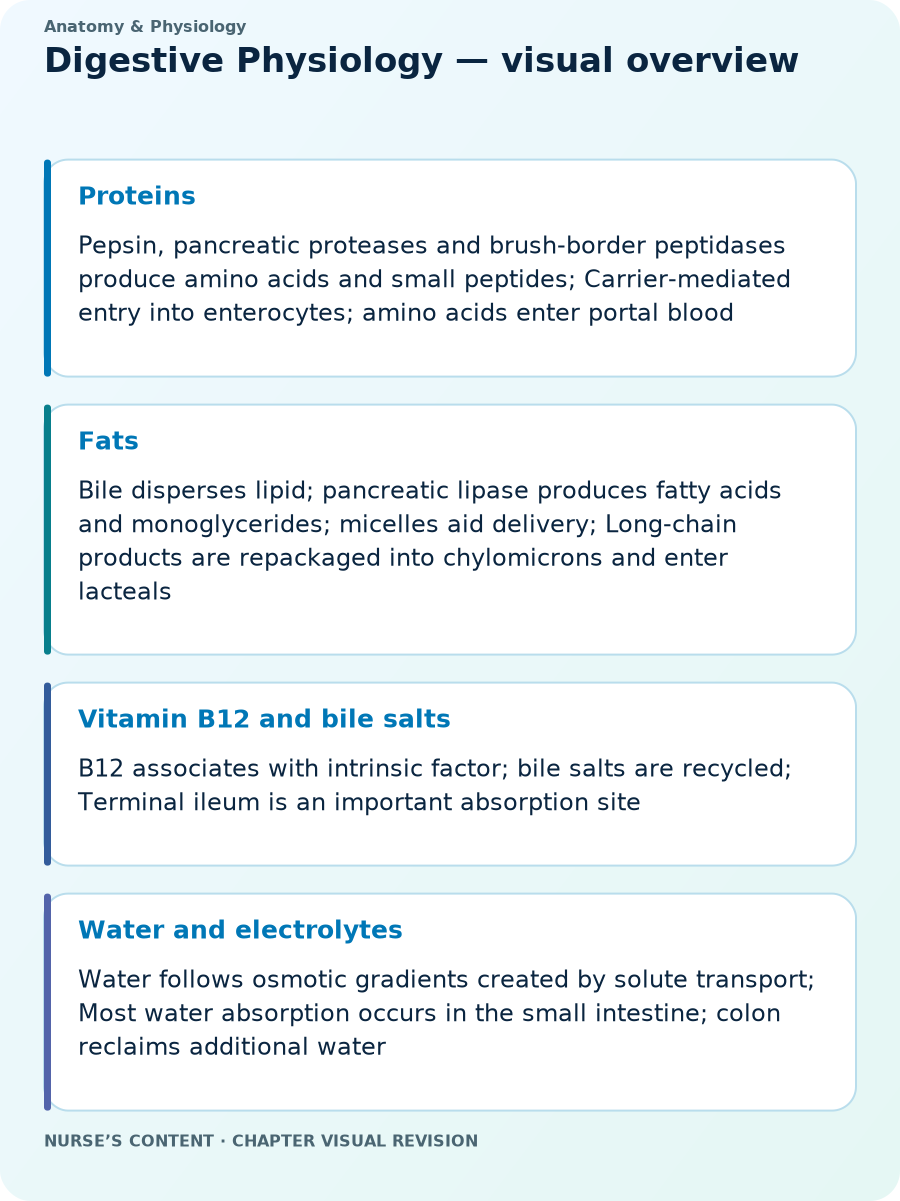
| Proteins | Pepsin, pancreatic proteases and brush-border peptidases produce amino acids and small peptides | Carrier-mediated entry into enterocytes; amino acids enter portal blood |
| Fats | Bile disperses lipid; pancreatic lipase produces fatty acids and monoglycerides; micelles aid delivery | Long-chain products are repackaged into chylomicrons and enter lacteals |
| Vitamin B12 and bile salts | B12 associates with intrinsic factor; bile salts are recycled | Terminal ileum is an important absorption site |
| Water and electrolytes | Water follows osmotic gradients created by solute transport | Most water absorption occurs in the small intestine; colon reclaims additional water |
Villi and microvilli increase epithelial surface area. Intestinal transport involves diffusion, facilitated transport and energy-dependent mechanisms, so mucosal damage can impair absorption even when food intake is adequate. Short-chain and some medium-chain fatty acids can reach portal blood more directly than the typical long-chain lipid pathway.
Liver, gallbladder and large-intestinal contributions
The liver produces bile; the gallbladder stores and concentrates it. Bile salts emulsify fat and support micelle formation. Bile is not a digestive enzyme. Most bile salts are reabsorbed and returned to the liver through enterohepatic circulation. Bile also provides an excretory route for bilirubin and some cholesterol. Obstruction of bile flow can therefore affect both fat absorption and pigment excretion.
Hepatocytes process absorbed nutrients, store glycogen and selected nutrients, form plasma proteins and urea, and metabolize many endogenous and foreign substances. Portal blood carries most absorbed water-soluble nutrients to the liver. Large-intestinal bacteria metabolize some residues and contribute vitamins, while the colon absorbs water and electrolytes and compacts faeces. Rectal distension initiates defecation reflexes, with voluntary external sphincter control modifying the final response.
Nursing applications and examination organization
Assess appetite, chewing, swallowing, abdominal symptoms, bowel pattern, hydration and weight trends. Link dysphagia with coordination and airway protection, diarrhoea with fluid losses and reduced contact time, and fatty stools with impaired lipid digestion or absorption. Persistent vomiting can disturb water, chloride, potassium and acid–base balance. These mechanisms guide observation and escalation without establishing a diagnosis from one symptom.
For a long answer, follow a meal from mouth to anus while distinguishing movement, secretion, digestion and absorption. For enzyme questions, name the source, substrate, products and site of action. For absorption questions, include the epithelial route and whether products enter portal blood or lymph. Explain why an organ’s effect can appear elsewhere, such as gastric intrinsic-factor loss affecting blood-cell formation or impaired liver protein synthesis contributing to oedema.
Quick Revision
- Digestion breaks food down, while absorption transfers products across epithelium.
- Enteric nerves, autonomic input and hormones coordinate movement and secretion.
- Gastric acid supports protein digestion and intrinsic factor supports B12 absorption.
- Pancreatic bicarbonate and enzymes support small-intestinal digestion.
- Bile assists lipid handling without acting as an enzyme.
- Water-soluble nutrients generally enter portal blood; long-chain lipids mainly enter lymph first.
Important Examination Questions
- Explain gastrointestinal movements and neural and hormonal regulation.
- Describe gastric secretion and the functions of acid, pepsin and intrinsic factor.
- Compare carbohydrate, protein and fat digestion and absorption.
- Discuss hepatic, pancreatic and gallbladder functions.
- Relate altered swallowing, diarrhoea and fat malabsorption to nursing observations.
References and further reading
Newly written physiology study notes. Read the supporting textbook sections for diagrams, mechanisms and further explanation.
- OpenStax Anatomy and Physiology 2e: Digestive System Processes and Regulation
- OpenStax Anatomy and Physiology 2e: The Mouth, Pharynx, and Esophagus
- OpenStax Anatomy and Physiology 2e: The Stomach
- OpenStax Anatomy and Physiology 2e: The Small and Large Intestines
- OpenStax Anatomy and Physiology 2e: Accessory Organs in Digestion
- OpenStax Anatomy and Physiology 2e: Chemical Digestion and Absorption
Chapter reference images