Adult Health Nursing
Nursing Management of Patients with Communicable and Infectious Diseases
HIV/AIDS, malaria, dengue, typhoid, viral hepatitis, tuberculosis, COVID-19 and other important infectious diseases; isolation precautions and infection prevention.
Open quizzes and study tools Download PDF
CHAPTER 16 / ADULT HEALTH NURSING 16. Nursing Management of Patients with Communicable and Infectious Diseases
1. Transmission and infection control
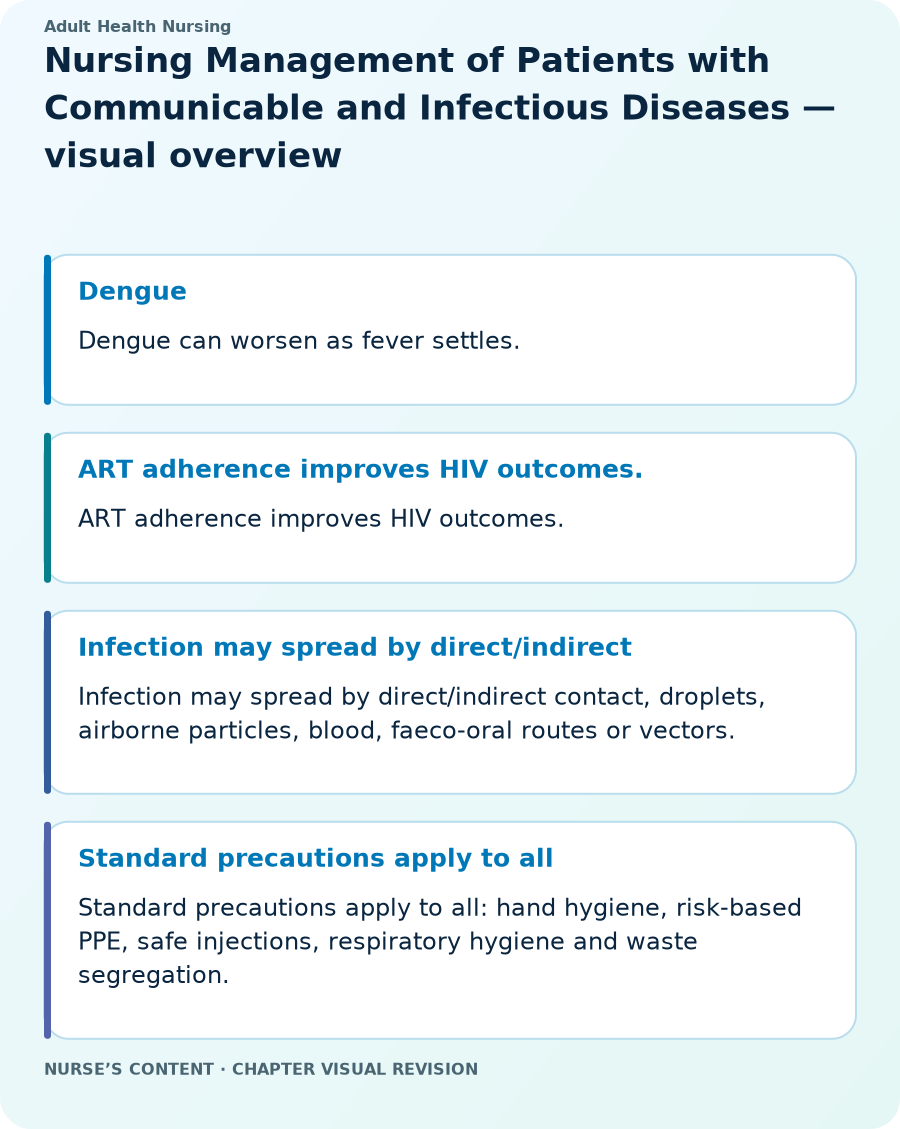
Infection may spread by direct/indirect contact, droplets, airborne particles, blood, faeco-oral routes or vectors. Standard precautions apply to all: hand hygiene, risk-based PPE, safe injections, respiratory hygiene and waste segregation. Additional contact, droplet or airborne precautions depend on organism and procedure. Isolation separates infected persons; quarantine restricts exposed persons when public-health guidance indicates.
HIV/AIDS
Definition and pathophysiology: HIV infects CD4 cells; advanced disease predisposes to opportunistic infections.
Clinical features and investigations: Early febrile illness or asymptomatic, then weight loss/recurrent infections; approved testing algorithm, viral load and CD4 monitoring.
Management and nursing care: Combination ART and adherence support; monitor interactions, opportunistic infection prophylaxis/treatment as indicated. Universal precautions, confidentiality, PEP assessment after exposure, prevent stigma. Sustained undetectable viral load prevents sexual transmission.
Malaria
Definition and pathophysiology: Plasmodium parasites transmitted by infected Anopheles mosquitoes.
Clinical features and investigations: Fever, chills, headache, anaemia; microscopy/rapid test. Severe disease may cause coma, anaemia, renal injury or shock.
Management and nursing care: Urgent treatment by species, severity and local resistance guidance; monitor glucose, neurological status and fluid balance. Insecticide-treated nets and vector control.
Dengue
Definition and pathophysiology: Aedes-borne viral infection; vascular leakage in severe disease.
Clinical features and investigations: Fever, myalgia, headache; warning signs around defervescence include abdominal pain, persistent vomiting, bleeding, lethargy. NS1/PCR or serology depending illness phase; serial haematocrit/platelets.
Management and nursing care: Careful fluid management and monitoring; avoid aspirin/NSAIDs due to bleeding. Escalate shock or organ involvement; platelet count alone does not determine transfusion.
Typhoid
Definition and pathophysiology: Salmonella Typhi/Paratyphi infection via contaminated food/water.
Clinical features and investigations: Persistent fever, abdominal symptoms, headache, possible perforation/bleeding; blood culture preferred early.
Management and nursing care: Prescribed antibiotics based on resistance, hydration, nutrition, hygiene and surveillance; urgent review for severe abdominal pain or shock.
Viral hepatitis
Definition and pathophysiology: A/E predominantly faeco-oral; B/C mainly blood/body fluids.
Clinical features and investigations: Jaundice, nausea, fatigue or asymptomatic; serology and liver tests.
Management and nursing care: Support hydration/nutrition, antivirals for selected B/C, vaccination A/B where appropriate, harm reduction and safe injections. Acute liver failure signs need escalation.
Tuberculosis
Definition and pathophysiology: Airborne bacterial disease, pulmonary or extrapulmonary.
Clinical features and investigations: Cough, fever, weight loss; rapid molecular testing and susceptibility, imaging.
Management and nursing care: Airborne isolation in infectious pulmonary disease, NTEP-directed treatment, adherence and contact management, adverse drug monitoring.
COVID-19
Definition and pathophysiology: SARS-CoV-2 respiratory infection with variable severity.
Clinical features and investigations: Fever, cough, dyspnoea or other symptoms; testing according to clinical context.
Management and nursing care: Assess oxygenation/risk, prescribed antivirals or other treatment for eligible patients, oxygen/support when needed, follow current precautions and vaccination recommendations.
Other important infections
Definition and pathophysiology: Leprosy affects skin/peripheral nerves; leptospirosis may follow contaminated water; rabies is a fatal encephalitis after symptoms start.
Clinical features and investigations: Leprosy: sensory skin patches/nerve impairment; leptospirosis: fever, myalgia, jaundice; animal bite exposure requires risk assessment before symptoms.
Management and nursing care: Refer for leprosy multidrug therapy, treat leptospirosis as indicated; immediately wash suspected rabies exposure thoroughly with soap/water and seek prompt vaccine/immunoglobulin assessment according to category. Do not wait for symptoms.
2. Nursing responsibilities and public health
Maintain surveillance and reporting according to requirements, specimen collection safety and patient education. Assess fever with travel/exposure, vulnerable contacts, dehydration and sepsis. Use appropriate isolation without compromising dignity. Promote vaccination, sanitation, vector control and adherence to complete indicated treatment.
3. Important Examination Questions
Long Answer Questions
- 1. Explain modes of disease transmission and nursing management of dengue, malaria and TB.
Short Answer Questions
- 1. Differentiate isolation and quarantine
- 2. explain HIV prevention
- 3. describe typhoid complications.
Very Short Answer Questions (with answers)
- 1. Which mosquito transmits malaria? — Anopheles.
- 2. Which vector transmits dengue? — Aedes.
4. Quick Revision
- • Dengue can worsen as fever settles.
- • TB is airborne.
- • ART adherence improves HIV outcomes.
5. Conclusion
Dengue can worsen as fever settles. TB is airborne. ART adherence improves HIV outcomes.
Chapter reference images